
IELTSスピーキングPart1は、質問ごとに「答える順番」を決めておき、その順に自分に合う表現を2〜4個つなげれば、短くても答えとして成り立ちます。Yes/Noだけで終わる人も、理由や補足を足す場所が決まっていれば、その場で文を考える負担が減ります。
この記事では、時期を問わず出題される通年トピック(Work and studies・Hometown・Home and decoration)の33の質問について、答える順番と使える英語表現を質問別に解説します。
質問を聞いたときに何から話せばよいか固まってしまう方や、Yes/Noで終わってしまう方に向けた記事です。
 Riku / Kohei
RikuとKohei(IELTS講師・二人ともIELTS Overall 8.0)。2009年にカナダ初の日本人講師陣によるIELTS専門校として創設されたスクールを運営し、12年間で1,500人以上の日本人を指導してきました。その経験と公式情報の裏取りをもとに、このブログを執筆しています。
( note:【IELTS攻略チャンネル】スクール生の実績 )
質問ごとの答え方が固まったら、次は本番で出る問題で練習しましょう。出題期間別のスピーキング予想問題集を公式LINEで配っています。
IELTSスピーキングPart1の答え方は「答える順番」を決めるだけ
Part1の答え方は、質問ごとに「回答の流れ」(立場→具体→補足など)を決め、各段階の表から自分に合う表現を2〜4個選んでつなげることです。下の表は、時期を問わず出題される通年トピック(Work and studies・Hometown・Home and decoration)の質問ごとに、その流れと選べる表現をまとめたものです。
試験全体の流れを先に確認したい方は、試験室に入ってから退室するまでの流れもあわせて読んでください。
表の使い方
- 質問の下にある「回答の流れ」で、答える順番を確認します。
- 表を上から順に見て、自分に当てはまる表現を2〜4個選びます。すべてを使う必要はありません。
- 選んだ表現を、回答の流れの順につなげて言います。
各質問の表現は、実際の回答で使う順番に並んでいます。同じ欄の表現は基本的に選択肢なので、似た表現を一つの回答で重ねすぎないようにしましょう。
[job]などの置き換え方
[job]、[place]、[verb]などは、自分の情報に置き換えます。冠詞まで含めて入れる場合は、[place]にa caféのように入れるので、I work part-time at [place]. はI work part-time at a café. になります。質問の前提が自分に当てはまらないとき
質問の前提が自分に当てはまらないときは、最初に短く訂正してから、自分の状況について答えましょう。例えば住まいの質問でyour flatと聞かれて一戸建てに住んでいる場合は、Actually, I live in a detached house, not a flat. と先に言い、その後は今の住まいについて続けます。
質問そのものが聞き取れなかったときは、聞き返すときの英語フレーズで聞き返してかまいません。
仕事と学業(Work and studies)の10問
仕事、大学・専門学校、高校、家事・育児、現在は仕事も学業もしていない場合のうち、自分の立場に合う表現だけを選びます。仕事と勉強の両方について聞かれたように見える質問でも、通常は自分に当てはまる側だけに答えれば十分です。
例えば会社員の方は、学業の質問でも仕事の表現だけで答えてかまいません。
Do you work or are you a student?
回答の流れ: 現在の立場 → 学年・職種・家庭での役割 → 日常の補足
| 1. 現在の立場を答える | |
|---|---|
| 使える表現 | 意味 |
| I work full-time as a/an [job]. | フルタイムで〜として働いています |
| I work part-time at [place]. | 〜でパートタイムで働いています |
| I’m self-employed. | 自営業です |
| I’m a high school student. | 高校生です |
| I’m a university student. | 大学生です |
| I’m studying at a vocational school. | 専門学校で学んでいます |
| I don’t have a paid job at the moment. I mainly take care of things at home. | 現在は仕事には就かず、主に家のことをしています |
| I’m a stay-at-home parent at the moment. | 現在は家で子育てをしています |
| I’m not working or studying at the moment. | 現在は仕事も勉強もしていません |
| I’m currently between jobs. | 現在は前の仕事を辞め、次の仕事に就くまでの間です |
| 2. 立場を具体化する | |
|---|---|
| 使える表現 | 意味 |
| I work in the [field] industry. | 〜業界で働いています |
| I work for a company in the [field] industry. | 〜業界の会社に勤めています |
| I’m in my first / second / third year of high school. | 高校1年/2年/3年です |
| I’m in my first / second / third / fourth year of university. | 大学1年/2年/3年/4年です |
| I’m majoring in [subject]. | 〜を専攻しています |
| I do most of the housework at home. | 家では、主に私が家事をしています |
| I spend most of my day looking after my family. | 一日の大半を家族の世話をして過ごします |
| I’m taking some time off before looking for another job. | 次の仕事を探す前に少し休んでいます |
| 3. 普段の状況を補足する | |
|---|---|
| 使える表現 | 意味 |
| I usually work from home. | 普段は在宅勤務をしています |
| I work remotely most of the time. | ほとんどの場合、リモートで働いています |
| I go to school five days a week. | 週5日学校へ通っています |
| I have classes on most weekdays. | 平日はたいてい授業があります |
| I spend most of my day doing housework. | 一日の大半は家事をして過ごします |
| I’m currently looking for a new job. | 現在、新しい仕事を探しています |
| At the moment, I’m mainly focusing on [activity]. | 今は主に〜に取り組んでいます |
| These days, I spend most of my time [V-ing]. | 最近は、〜をして過ごすことが多いです |
| I’m taking a break while I decide what to do next. | 今後どうするか考えながら、しばらく休んでいます |
What work do you do? / What subjects are you studying?
回答の流れ: 現在の立場 → 具体的な内容または現在の過ごし方 → 今取り組んでいること
※仕事も勉強もしていない場合は、1の I’m not working or studying at the moment. を選び、3へ進みます。
| 1. 仕事・勉強・家庭での役割を答える | |
|---|---|
| 使える表現 | 意味 |
| I work as a/an [job]. | 〜として働いています |
| I work in the [field] industry. | 〜業界で働いています |
| I mainly study [subject] at university. | 大学では主に〜を学んでいます |
| I’m majoring in [subject]. | 〜を専攻しています |
| I’m studying [subject] at a vocational school. | 専門学校で〜を学んでいます |
| I’m studying a broad range of subjects at high school. | 高校で幅広い科目を勉強しています |
| The subjects I focus on most are [A] and [B]. | 特に力を入れている科目はAとBです |
| I mainly take care of things at home, such as cooking, cleaning, and shopping. | 主に料理や掃除、買い物など、家のことをしています |
| I’m a stay-at-home parent, so I spend most of my day looking after my children. | 家で子育てをしているので、一日の大半を子どもの世話をして過ごします |
| I’m not working or studying at the moment. | 現在は仕事も勉強もしていません |
| 2. 具体的な内容を説明する | |
|---|---|
| 使える表現 | 意味 |
| My job mainly involves [V-ing]. | 仕事では主に〜をします |
| I’m responsible for [task]. | 〜を担当しています |
| I deal with customers on a daily basis. | 日常的に顧客対応をしています |
| I work closely with [team or department]. | 〜というチームや部署とよく連携して仕事をしています |
| Most of my classes are related to [field]. | 授業の大半は〜分野に関係しています |
| My course involves a lot of practical training. | 私のコースは実習が多いです |
| I take both compulsory and optional subjects. | 必修科目と選択科目の両方を履修しています |
| I mainly do the cooking, cleaning, and other household tasks. | 主に料理や掃除などの家事をしています |
| I also take care of things like shopping and managing the household budget. | 買い物や家計のやりくりなどもしています |
| 3. 仕事も勉強もしていない場合は、現在の過ごし方を続ける | |
|---|---|
| 使える表現 | 意味 |
| At the moment, I’m mainly focusing on [activity]. | 今は主に〜に取り組んでいます |
| These days, I spend most of my time [V-ing]. | 最近は、〜をして過ごすことが多いです |
| I’m taking a break while I decide what to do next. | 今後どうするか考えながら、しばらく休んでいます |
| I’m currently looking for a job. | 現在、仕事を探しています |
| I’m planning to start a course in [time]. | 〜に講座やコースを始める予定です |
| 4. 今取り組んでいることを加える | |
|---|---|
| 使える表現 | 意味 |
| I’m currently working on [project]. | 現在は〜というプロジェクトに取り組んでいます |
| At the moment, I’m learning how to [verb]. | 今は〜する方法を学んでいます |
| What I’m interested in right now is [topic]. | 今、興味があるのは〜です |
| I’m preparing for [exam] at the moment. | 現在は〜という試験に向けて準備しています |
| These days, I’m trying to get better at [skill]. | 最近は〜というスキルを伸ばそうとしています |
Why did you choose that job?
回答の流れ: 主な理由 → きっかけ・背景 → 自分との相性・現在の実感
| 1. 主な理由を答える | |
|---|---|
| 使える表現 | 意味 |
| I chose this job mainly because I enjoy working with people. | 人と関わる仕事が好きなので、この仕事を選びました |
| I chose this job mainly because it offered stable employment. | 安定して働けそうだったので、この仕事を選びました |
| The main reason I went into this field was that I wanted to help people. | 人の役に立ちたかったことが、この分野へ進んだ一番の理由です |
| The main reason I went into this field was that it suited my skills. | 自分のスキルに合っていたことが、この分野へ進んだ一番の理由です |
| I’ve always been interested in [field]. | 昔からずっと〜分野に興味があります |
| I wanted a job where I could [verb]. | 〜できる仕事に就きたいと思っていました |
| To be honest, it wasn’t my first choice, but the opportunity came up. | 正直、第一志望ではありませんでしたが、ちょうど働く機会がありました |
| 2. きっかけや背景を加える | |
|---|---|
| 使える表現 | 意味 |
| I became interested in it when I took a related class. | 関連する授業を受けたことがきっかけで、興味を持つようになりました |
| A family member first told me about the field. | 家族からその分野について聞いたことが最初のきっかけでした |
| Someone in my family works in the same field. | 家族にも同じ分野で働いている人がいます |
| I studied something related to it at university. | 大学でそれに関連することを学びました |
| A friend recommended the position, and it sounded like a good fit. | 友人にその仕事を勧められ、自分に合いそうだと思いました |
| What attracted me was the chance to [verb]. | 魅力を感じたのは、〜できることでした |
| It offered better working conditions than my previous job. | 前の仕事より勤務条件が良かったです |
| 3. 自分との相性や現在の実感を述べる | |
|---|---|
| 使える表現 | 意味 |
| It really plays to my strengths. | 自分の強みをうまく生かせます |
| I feel like it’s a good fit for me. | 自分に合っていると感じます |
| It gives me plenty of opportunities to learn. | 学ぶ機会がたくさんあります |
| I find it challenging but rewarding. | 大変ですが、やりがいを感じます |
| Looking back, I think I made the right choice. | 振り返ると、この仕事を選んでよかったと思います |
Why did you choose to study that subject?
回答の流れ: 主な理由 → 興味・得意分野・選択事情/選んだ後の実感 → 将来とのつながり
| 1. 主な理由を答える | |
|---|---|
| 使える表現 | 意味 |
| I chose it mainly because I’ve always been interested in [topic]. | 昔から〜に興味があったので選びました |
| The main reason I chose this subject was that I found it genuinely interesting. | 本当に面白いと感じたことが、この科目を選んだ一番の理由です |
| The main reason I chose this subject was that it was relevant to my future plans. | 将来の計画に関係していたことが、この科目を選んだ一番の理由です |
| I chose it because it was one of my strongest subjects. | 得意科目の一つだったので選びました |
| I wanted to learn more about [topic]. | 〜についてもっと学びたいと思いました |
| I didn’t have much choice because it was compulsory. | 必修だったので、あまり選択の余地はありませんでした |
| 2. 興味・得意分野・きっかけ、選んだ後の実感を具体化する | |
|---|---|
| 使える表現 | 意味 |
| I’ve been interested in it since I was in junior high school. | 中学生の頃から興味を持っています |
| I had a teacher who made the subject really interesting. | その科目の面白さを教えてくれた先生がいました |
| I enjoy learning how [something] works. | 〜がどのように成り立つかを学ぶのが好きです |
| It combines my interests in [A] and [B]. | AとBの両方への関心を生かせます |
| My parents encouraged me to choose it. | 両親にその科目を選ぶよう勧められました |
| It seemed more practical than the other options. | ほかの選択肢より実用的に思えました |
| Even so, I found some parts of it interesting. | それでも、面白いと感じる部分はありました |
| I later realised that it could be useful in the future. | 後になって、将来役に立つかもしれないと気づきました |
| 3. 将来とのつながりを述べる | |
|---|---|
| 使える表現 | 意味 |
| It’s closely related to the career I want to pursue. | 目指している職業と密接に関係しています |
| I think it will be useful in the future. | 将来役に立つと思います |
| It could open up a wide range of career options. | 将来の進路の選択肢が大きく広がりそうです |
| I haven’t decided on a career yet, but it gives me several options. | まだ進路は決めていませんが、いくつかの選択肢につながります |
| So far, I’m happy with my choice. | 今のところ、この選択に満足しています |
Do you like your job?
回答の流れ: 好きかどうか → 好きまたは好きではない理由 → 具体例 → 感情・価値
| 1. 好きかどうかを答える | |
|---|---|
| 使える表現 | 意味 |
| Yes, I really enjoy my job. | はい、今の仕事がとても好きです |
| Yes, for the most part, I do. | はい、ほとんどの面では好きです |
| It’s not perfect, but overall I like it. | 完璧ではありませんが、全体としては好きです |
| To be honest, I don’t enjoy it very much. | 正直、あまり好きではありません |
| It depends on the day, but generally I like it. | 日によりますが、基本的には好きです |
| 2. 好きまたは好きではない理由を示す | |
|---|---|
| 使える表現 | 意味 |
| What I like most about my job is [aspect]. | 仕事で一番好きなのは〜という点です |
| The best part is that I get to [verb]. | 一番好きなのは〜できることです |
| I particularly enjoy [activity]. | 特に〜をするのが好きです |
| I like the fact that every day is different. | 毎日違うことがある点が好きです |
| I get on well with the people I work with. | 一緒に働く人たちとうまくいっています |
| I have quite a flexible schedule. | 勤務時間にかなり融通が利きます |
| What I like least about my job is [aspect]. | 仕事で一番好きではないのは〜という点です |
| I find some of the tasks quite repetitive. | 一部の作業はかなり単調だと感じます |
| The working hours don’t suit me very well. | 勤務時間があまり自分に合っていません |
| I don’t get many opportunities to [verb]. | 〜する機会があまりありません |
| 3. 具体例や仕事から得られるものを加える | |
|---|---|
| 使える表現 | 意味 |
| For example, I often have the chance to [verb]. | 例えば、〜する機会がよくあります |
| It allows me to use the skills I’ve developed. | これまで身につけたスキルを生かせます |
| I’m constantly learning something new. | 常に何か新しいことを学んでいます |
| I find it satisfying when I finish a difficult task. | 難しい仕事を終えたときに満足感を覚えます |
| I find it satisfying when a customer thanks me. | 顧客に感謝されたときに満足感を覚えます |
| It gives me a real sense of achievement. | 大きな達成感を得られます |
| It can be demanding, but it’s also rewarding. | 負担が大きいこともありますが、やりがいもあります |
| I often feel tired by the end of the day. | 一日の終わりには疲れていることが多いです |
| It can be difficult to stay motivated. | やる気を保つのが難しいこともあります |
Is there anything you dislike about your job?
回答の流れ: 嫌いな点の有無 → 満足している理由または具体的な負担 → 自分への影響 → 必要に応じて肯定的な補足
| 1. 嫌いな点の有無を答える | |
|---|---|
| 使える表現 | 意味 |
| There isn’t anything I particularly dislike about it. | 特に嫌だと感じる点はありません |
| The part I like least is [aspect]. | 仕事で一番気に入っていないのは〜という部分です |
| What I don’t like about my job is [aspect]. | 仕事で好きではないのは〜という点です |
| I’m not a big fan of [activity]. | 〜をするのはあまり好きではありません |
| The main downside is that the hours are long. | 一番の難点は、勤務時間が長いことです |
| The main downside is that the work can be repetitive. | 一番の難点は、仕事が単調になりやすいことです |
| 2. 特に嫌いな点がない場合は、その理由を加える | |
|---|---|
| 使える表現 | 意味 |
| Overall, the working conditions are quite good. | 全体として、働く環境はかなりよいです |
| I get on well with my colleagues, and the workload is manageable. | 同僚との関係がよく、仕事量も無理のない範囲です |
| Of course, there are busy days, but nothing really bothers me. | もちろん忙しい日もありますが、特に気になることはありません |
| 3. 嫌いな点がある場合は、負担を具体化する | |
|---|---|
| 使える表現 | 意味 |
| I sometimes have to work long hours. | ときどき長時間働かなければなりません |
| The workload can be quite heavy. | 仕事量がかなり多いことがあります |
| I have to deal with tight deadlines. | 厳しい締め切りを守らなければなりません |
| My commute takes a long time. | 通勤に時間がかかります |
| Some of the tasks are quite repetitive. | かなり単調な業務もあります |
| It’s difficult to take time off during busy periods. | 忙しい時期は休みを取りにくいです |
| I don’t have as much contact with people as I’d like. | 望んでいるほど人と関わる機会がありません |
| 4. 自分への影響を述べる | |
|---|---|
| 使える表現 | 意味 |
| It can be quite stressful at times. | ときどきかなりストレスを感じます |
| I sometimes feel exhausted by the end of the day. | 一日の終わりには疲れ切っていることがあります |
| It makes it hard to maintain a good work-life balance. | 仕事と私生活のバランスを保ちにくくなります |
| I don’t get much time to myself on weekdays. | 平日は自分の時間をあまり取れません |
| After a while, it can get a little boring. | しばらくすると少し退屈に感じることがあります |
| 5. 必要なら肯定的に補足する | |
|---|---|
| 使える表現 | 意味 |
| That said, I still like the job overall. | とはいえ、全体としては今の仕事が好きです |
| Apart from that, I’m quite happy with my job. | その点を除けば、仕事にはかなり満足しています |
| I suppose most jobs have their downsides. | 多くの仕事には何かしら大変な面があると思います |
| The good parts definitely outweigh the bad ones. | よい点のほうが悪い点を明らかに上回っています |
What do you like about your studies?
回答の流れ: 好きな部分 → 内容の具体例 → 得られる力・感情 → 将来とのつながり
| 1. 好きな部分を直接答える | |
|---|---|
| 使える表現 | 意味 |
| What I like most about my studies is [aspect]. | 勉強で一番好きなのは〜という点です |
| The part I enjoy most is [activity]. | 勉強の中で一番楽しいのは〜です |
| I particularly enjoy learning about [topic]. | 特に〜について学ぶのが好きです |
| My favourite subject is [subject]. | 一番好きな科目は〜です |
| I like the practical side of my course. | コースの実践的な部分が好きです |
| 2. 内容を具体化する | |
|---|---|
| 使える表現 | 意味 |
| I enjoy classes where we get to [verb]. | 〜できる授業が好きです |
| We often discuss [topic] in class. | 授業では〜についてよく話し合います |
| I get to work on interesting projects. | 興味深いプロジェクトに取り組めます |
| I like doing experiments and seeing how things work. | 実験をして物事の仕組みを見るのが好きです |
| I enjoy studying with my classmates. | クラスメートと一緒に勉強するのが好きです |
| The teachers explain things clearly. | 先生たちは分かりやすく説明してくれます |
| 3. 得られる力や感情を述べる | |
|---|---|
| 使える表現 | 意味 |
| It helps me understand the world better. | 世の中をより深く理解する助けになります |
| It allows me to develop useful skills. | 役立つスキルを伸ばせます |
| It really makes me think. | いろいろと考えさせられるところが面白いです |
| I feel a real sense of achievement when I understand something difficult. | 難しい内容を理解できたときに大きな達成感があります |
| It keeps me motivated to learn more. | もっと学びたいという意欲につながります |
| 4. 将来とのつながりを加える | |
|---|---|
| 使える表現 | 意味 |
| It will be useful for the career I want to pursue. | 目指している仕事に役立つと思います |
| I can see myself using this knowledge in the future. | 将来、この知識を使う場面がありそうです |
| It gives me a good foundation for further study. | さらに学ぶためのよい基礎になります |
What do you dislike about your studies?
回答の流れ: 嫌いな点の有無 → 満足している理由または具体的な負担 → 自分への影響 → 必要に応じて肯定的な補足
| 1. 嫌い・大変な部分を直接答える | |
|---|---|
| 使える表現 | 意味 |
| There isn’t anything I particularly dislike about my studies. | 勉強について、特に嫌だと感じる点はありません |
| What I dislike most about my studies is [aspect]. | 勉強で一番嫌なのは〜という点です |
| The part I enjoy least is [activity]. | 勉強の中で一番楽しくないのは〜です |
| What I find most difficult is [activity]. | 一番難しいと感じるのは〜です |
| I’m not a big fan of [subject]. | 〜という科目はあまり好きではありません |
| I sometimes struggle with [task]. | 〜という課題に苦労することがあります |
| 2. 特に嫌いな点がない場合は、その理由を加える | |
|---|---|
| 使える表現 | 意味 |
| Overall, I enjoy what I’m studying. | 全体として、今学んでいることが好きです |
| Most of the subjects are interesting and useful. | ほとんどの科目は面白く、役に立ちます |
| The workload is manageable most of the time. | ほとんどの時期は、無理なくこなせる量の課題です |
| 3. 嫌いな点がある場合は、負担を具体化する | |
|---|---|
| 使える表現 | 意味 |
| I get a lot of homework. | 宿題がたくさん出ます |
| There’s quite a lot to memorise. | 覚えることがかなり多いです |
| We have tests almost every week. | ほぼ毎週テストがあります |
| I have to study several subjects at the same time. | 複数の科目を同時に勉強しなければなりません |
| I have quite a heavy workload. | 課題量がかなり多いです |
| I often have to meet tight deadlines. | 短い提出期限に間に合わせなければならないことがよくあります |
| I have to give a lot of presentations. | プレゼンをたくさんしなければなりません |
| Some of the compulsory subjects aren’t very interesting. | 必修科目の中にはあまり興味を持てないものもあります |
| 4. 自分への影響を述べる | |
|---|---|
| 使える表現 | 意味 |
| It takes up a lot of my free time. | 自由時間をかなり取られます |
| I find it quite stressful. | かなりストレスを感じます |
| It can be hard to keep up with everything. | 授業や課題をすべてこなしていくのが大変なことがあります |
| I sometimes feel under a lot of pressure. | ときどき強いプレッシャーを感じます |
| I sometimes feel exhausted by the end of the day. | 一日の終わりには疲れ切っていることがあります |
| 5. 必要なら肯定的に補足する | |
|---|---|
| 使える表現 | 意味 |
| That said, I know it’s necessary. | とはいえ、必要なことだとは分かっています |
| Apart from that, I enjoy my studies. | その点を除けば、勉強は楽しいです |
| Overall, though, I’m happy with what I’m studying. | それでも全体としては、今学んでいる内容に満足しています |
| I think the effort will pay off in the long run. | 長い目で見れば、努力は報われると思います |
What was your dream job when you were young?
回答の流れ: 子どもの頃の夢の有無 → 憧れた理由または夢を絞っていなかった理由 → 当時の気持ち
| 1. 子どもの頃の夢を答える | |
|---|---|
| 使える表現 | 意味 |
| When I was young, I wanted to be a/an [job]. | 子どもの頃は〜になりたいと思っていました |
| My dream was to become a/an [job]. | 夢は〜になることでした |
| I used to dream of becoming a/an [job]. | 以前は〜になることを夢見ていました |
| I went through a phase when I wanted to be a/an [job]. | 一時期、〜になりたいと思っていました |
| I didn’t have one particular dream job. | 特定の夢の職業はありませんでした |
| 2. 特定の夢がなかった場合は、当時の状況を続ける | |
|---|---|
| 使える表現 | 意味 |
| I was interested in lots of different things. | いろいろなことに興味がありました |
| I kept changing my mind about what I wanted to be. | 将来なりたいものが何度も変わりました |
| I didn’t think seriously about careers at that age. | その頃は将来の仕事について真剣に考えていませんでした |
| 3. 特定の夢があった場合は、理由やきっかけを説明する | |
|---|---|
| 使える表現 | 意味 |
| I was fascinated by [topic]. | 〜に強く心を引かれていました |
| I really admired [person]. | 〜という人に強く憧れていました |
| I was inspired by [person or experience]. | 〜という人や経験に影響を受けました |
| I liked the idea of [V-ing]. | 〜するという考えに魅力を感じていました |
| I thought it would be exciting to [verb]. | 〜するのはわくわくしそうだと思っていました |
| I was good at [subject], so it seemed like a natural choice. | 〜が得意だったので、自然な選択に思えました |
| 4. 当時の気持ちを補足する | |
|---|---|
| 使える表現 | 意味 |
| At the time, it seemed like the perfect job. | 当時は理想的な仕事に思えました |
| I was quite serious about it for a few years. | 数年間はかなり本気で考えていました |
| It was more of a childhood fantasy than a realistic plan. | 現実的な計画というより、子どもらしい憧れでした |
| My dream job changed quite often. | なりたい仕事は何度も変わりました |
Have you changed your mind about your dream job?
回答の流れ: 考えが変わったか → 昔と今または特定の夢がなかったこと → 現在の考え → 希望
| 1. 考えが変わったかを答える | |
|---|---|
| 使える表現 | 意味 |
| Yes, I’ve completely changed my mind. | はい、考えはすっかり変わりました |
| Yes, my career goals have changed quite a lot. | はい、仕事に関する目標はかなり変わりました |
| Not really. I’m still interested in the same kind of work. | いいえ、今も同じような仕事に興味があります |
| To some extent, yes. | ある程度は変わりました |
| My ideas have changed a few times, and I’m still not completely sure what I want to do. | 考えは何度か変わり、今も何をしたいのか完全には決まっていません |
| I never had one particular dream job, so there wasn’t really anything to change my mind about. | もともと特定の夢の職業がなかったので、考えが変わったという感じではありません |
| 2. 特定の夢がなかった場合は、現在の考えを続ける | |
|---|---|
| 使える表現 | 意味 |
| I was interested in several different careers instead. | 一つに絞らず、いくつかの職業に興味がありました |
| I’ve only recently started thinking seriously about what kind of work would suit me. | 最近になって、どんな仕事が自分に合うか真剣に考え始めました |
| I’m still exploring different options. | 今もさまざまな選択肢を検討しているところです |
| 3. 特定の夢があった場合は、昔と今を比べる | |
|---|---|
| 使える表現 | 意味 |
| I used to want to be a/an [job], but now I’d rather [verb]. | 以前は〜になりたかったですが、今はむしろ〜したいです |
| These days, I’m more interested in [field]. | 今は〜分野により興味があります |
| I still like [field], but I no longer want to do it professionally. | 今も〜は好きですが、職業にしたいとは思わなくなりました |
| The basic idea is the same, but the specific job has changed. | 大まかな方向性は同じですが、具体的な職業は変わりました |
| 4. 変わった理由を説明する | |
|---|---|
| 使える表現 | 意味 |
| As I got older, I became more realistic about my career. | 年齢を重ねるにつれて、進路をより現実的に考えるようになりました |
| I realised the job didn’t suit my strengths. | その仕事は自分の強みに合わないと気づきました |
| My interests gradually shifted towards [field]. | 興味が徐々に〜分野へ移りました |
| I learned more about what the job actually involves. | その仕事の実際の内容をより詳しく知りました |
| My studies introduced me to a different career path. | 勉強を通して別の進路を知りました |
| 5. 現在の希望を加える | |
|---|---|
| 使える表現 | 意味 |
| Now I’d like a job that allows me to [verb]. | 今は〜できる仕事に就きたいです |
| I’m looking for something that offers a good work-life balance. | 仕事と私生活のバランスを取りやすい仕事を求めています |
| For now, I’m keeping my options open. | 今のところは選択肢を一つに絞らないようにしています |
| I hope to find a career that I genuinely enjoy. | 心から楽しめる仕事を見つけたいです |
出身地(Hometown)の13問
hometownは、基本的に自分が生まれ育った町や、自分の出身地だと考える場所を指します。今住んでいる場所と同じとは限りません。
今は地元に住んでいない場合は、必要に応じてそのことを最初に伝えてから、地元について答えましょう。例えばI moved away for university, but I still visit regularly. のように、離れていることと今も訪れていることを1文で伝えられます。
Please describe your hometown a little.
回答の流れ: 場所・位置 → 規模・雰囲気 → 施設・特徴 → 個人的なつながり
| 1. 場所や位置を答える | |
|---|---|
| 使える表現 | 意味 |
| My hometown is [place]. | 私の地元は〜です |
| I’m from a town called [name]. | 〜という町の出身です |
| It’s located in the [part] of Japan. | 日本の〜部にあります |
| It’s about [time] from [city] by train. | 〜市から電車で約〜の場所です |
| It’s a coastal town in [area]. | 〜地域にある海沿いの町です |
| 2. 規模や雰囲気を伝える | |
|---|---|
| 使える表現 | 意味 |
| It’s a fairly small and quiet place. | 比較的小さくて静かな場所です |
| It’s a lively city with a large population. | 人口が多く活気のある都市です |
| It’s not very big, but it’s quite convenient. | それほど大きくはありませんが、かなり便利です |
| It has a relaxed atmosphere. | 落ち着いた雰囲気があります |
| It has a good mix of built-up areas and natural surroundings. | 市街地と自然の多い地域がほどよく共存しています |
| It’s surrounded by mountains and greenery. | 山や緑に囲まれています |
| 3. 施設や特徴を具体化する | |
|---|---|
| 使える表現 | 意味 |
| It has all the basic amenities I need. | 生活に必要な施設がひと通りそろっています |
| There are plenty of shops, restaurants, and parks. | 店やレストラン、公園がたくさんあります |
| It’s known for its beautiful scenery. | 美しい景色で知られています |
| Public transport is convenient and easy to use. | 公共交通機関が便利で利用しやすいです |
| The area is especially popular with families. | 特に家族世帯に人気の地域です |
| 4. 個人的なつながりを加える | |
|---|---|
| 使える表現 | 意味 |
| I was born and raised there. | そこで生まれ育ちました |
| I was born and raised in [place]. | 〜で生まれ育ちました |
| I grew up there, so I know the area very well. | そこで育ったので、その地域をよく知っています |
| Most of my family and close friends still live there. | 家族や親しい友人の多くが今もそこに住んでいます |
| I moved away for university, but I still visit regularly. | 大学進学で離れましたが、今も定期的に帰ります |
What is your town well-known for?
回答の流れ: 有名なもの → 具体例・特徴 → 人気・変化
| 1. 有名なものを答える | |
|---|---|
| 使える表現 | 意味 |
| It’s best known for [thing]. | 〜で最もよく知られています |
| It’s particularly famous for [thing]. | 特に〜で有名です |
| My town is known for its [feature]. | 私の町は〜で知られています |
| To be honest, it isn’t famous for anything in particular. | 正直、特に何かで有名というわけではありません |
| It’s more of a residential town than a tourist destination. | 観光地というより住宅地です |
| 2. 特徴や具体例を加える | |
|---|---|
| 使える表現 | 意味 |
| One of its main attractions is [place]. | 主な見どころの一つは〜です |
| The local speciality is [food]. | 地元の名物は〜です |
| We have an annual festival called [name]. | 〜という毎年恒例の祭りがあります |
| It’s home to several historic buildings. | 歴史的な建物がいくつもあります |
| The area has some beautiful beaches and walking trails. | その地域には美しい海岸や散歩道があります |
| A lot of [product] is produced there. | そこでは〜がたくさん生産されています |
| 3. 人気や最近の様子を補足する | |
|---|---|
| 使える表現 | 意味 |
| It attracts a lot of visitors, especially in [season]. | 特に〜の季節には多くの観光客が訪れます |
| It’s quite popular among food lovers. | 食べ物が好きな人にかなり人気です |
| It has become more popular in recent years. | 近年、以前より人気が高まっています |
| Most people outside the area probably haven’t heard of it. | 地域外の人の多くは、おそらく知らないと思います |
| Many local people are proud of the town. | 地元を誇りに思っている人が多いです |
Do you like your hometown?
回答の流れ: 好きかどうか → 好き・嫌いな点 → 理由・感情 → 補足
| 1. 好きかどうかを答える | |
|---|---|
| 使える表現 | 意味 |
| Yes, I’m very fond of my hometown. | はい、地元がとても好きです |
| Yes, for the most part, I do. | はい、ほとんどの面では好きです |
| I have mixed feelings about it. | 好きな面とそうでない面の両方があります |
| To be honest, I don’t like it as much as I used to. | 正直、以前ほど好きではありません |
| I appreciate it more now than I did when I was younger. | 若い頃より今のほうが地元のよさを感じます |
| 2. 好き・嫌いな点を示す | |
|---|---|
| 使える表現 | 意味 |
| What I like most about it is the peaceful atmosphere. | 一番好きなのは穏やかな雰囲気です |
| I love how close it is to nature. | 自然が身近にあるところが大好きです |
| It’s a safe and comfortable place to live. | 安全で暮らしやすい場所です |
| The people are generally friendly and welcoming. | 人々は全体的に親しみやすく温かいです |
| What I don’t like about it is the lack of public transport. | 好きではないのは公共交通機関が少ない点です |
| There isn’t much to do, especially for young people. | 特に若い人にとって、することがあまりありません |
| 3. 理由や感情を加える | |
|---|---|
| 使える表現 | 意味 |
| I feel relaxed whenever I go back. | 帰るたびにほっとします |
| It brings back a lot of good memories. | よい思い出がたくさんよみがえります |
| Most of the people I care about live there. | 大切な人の多くがそこに住んでいます |
| It’s convenient enough for everyday life. | 日常生活には十分便利です |
| I sometimes find it a little too quiet. | ときどき少し静かすぎると感じます |
| 4. 必要なら全体評価を添える | |
|---|---|
| 使える表現 | 意味 |
| Overall, it’s a great place to grow up. | 全体として、子ども時代を過ごすにはとてもよい場所です |
| I wouldn’t want to live there forever, but I enjoy visiting. | ずっと住みたいとは思いませんが、訪れるのは好きです |
| Despite a few drawbacks, it still feels like home. | いくつか不便な点はあっても、やはり故郷だと感じます |
Is that a big city or a small place?
回答の流れ: 大都市か小さな場所か → 規模の具体化 → 暮らしへの影響
| 1. 規模を直接答える | |
|---|---|
| 使える表現 | 意味 |
| It’s a fairly large city. | かなり大きな都市です |
| It’s a medium-sized city. | 中規模の都市です |
| It’s a relatively small town. | 比較的小さな町です |
| It’s more like a small town than a city. | 都市というより小さな町に近いです |
| It’s a tiny village in the countryside. | 田舎にあるとても小さな村です |
| It used to be small, but it has grown quite a lot. | 以前は小さかったですが、かなり大きくなりました |
| 2. 規模を具体化する | |
|---|---|
| 使える表現 | 意味 |
| It has a population of around [number]. | 人口は約〜人です |
| The city centre is quite compact. | 中心部はかなりコンパクトです |
| You can get almost anywhere within [time]. | ほとんどの場所へ〜分以内で行けます |
| It has several busy commercial areas. | にぎやかな商業地区がいくつかあります |
| There are only a few shops and restaurants. | 店やレストランは数軒しかありません |
| Many people know each other, at least by sight. | 少なくとも顔見知りという人が多いです |
| 3. 暮らしへの影響を述べる | |
|---|---|
| 使える表現 | 意味 |
| It’s big enough to be convenient without feeling overwhelming. | 十分便利ですが、大都市ほど人や建物が多くて疲れることはありません |
| There are plenty of things to do. | することがたくさんあります |
| Life there is quiet and slow-paced. | そこでの生活は静かでゆったりしています |
| In some areas, you need a car to get around. | 地域によっては、移動に車が必要です |
| It can feel a little crowded during rush hour. | 通勤時間帯は少し混雑して感じることがあります |
How long have you been living there?
回答の流れ: 住んでいる期間 → 住み始めた時期・経緯 → 現在の状況
| 1. 期間を直接答える | |
|---|---|
| 使える表現 | 意味 |
| I’ve lived there all my life. | 生まれてからずっとそこに住んでいます |
| I’ve been living there for about [number] years. | 約〜年間そこに住んでいます |
| I’ve lived there since I was [age]. | 〜歳の頃からそこに住んでいます |
| I only moved there [time] ago. | そこへ引っ越したのはほんの〜前です |
| I don’t live there now, but I spent most of my childhood there. | 今は住んでいませんが、子ども時代の大半をそこで過ごしました |
| 2. 住み始めた時期や経緯を加える | |
|---|---|
| 使える表現 | 意味 |
| I was born and raised there. | そこで生まれ育ちました |
| My family moved there when I was in primary school. | 小学生の頃に家族でそこへ引っ越しました |
| I moved there for university. | 大学進学のためにそこへ引っ越しました |
| I moved there after I got a job in the area. | その地域で就職してから引っ越しました |
| I moved there when I got married. | 結婚したときにそこへ引っ越しました |
| 3. 現在の状況を補足する | |
|---|---|
| 使える表現 | 意味 |
| So I know the area really well. | そのため、その地域をとてもよく知っています |
| I’m still getting used to the area. | まだその地域には慣れていません |
| It already feels like home. | もう自分の居場所のように感じます |
| I moved away recently, but my family still lives there. | 最近離れましたが、家族は今もそこに住んでいます |
| I go back whenever I have a long break. | 長い休みがあるときはいつも帰ります |
Do you think you will continue living there for a long time?
回答の流れ: 住み続ける意向 → 条件・程度 → 理由 → 将来像
| 1. 意向を答える | |
|---|---|
| 使える表現 | 意味 |
| Yes, I can see myself living there for a long time. | はい、これからも長く住めそうです |
| Probably, at least for the next few years. | おそらく、少なくとも今後数年は住むと思います |
| I’m not sure yet. | まだ分かりません |
| Probably not. I’d like to move somewhere else eventually. | おそらく住み続けません。いずれ別の場所へ移りたいです |
| It really depends on my work or studies. | 仕事や学業次第です |
| I don’t live there anymore, but I’d consider moving back one day. | 今は地元に住んでいませんが、いつか戻ることは考えています |
| I don’t live there anymore, and I don’t think I’ll move back permanently. | 今は地元に住んでおらず、将来ずっと住むために戻ることもないと思います |
| 2. 条件や理由を説明する | |
|---|---|
| 使える表現 | 意味 |
| It’s a comfortable and convenient place to live. | 快適で暮らしやすい場所です |
| My family and close friends are nearby. | 家族や親しい友人が近くにいます |
| The cost of living is relatively low. | 生活費が比較的安いです |
| There are good schools and plenty of parks. | よい学校や公園がたくさんあります |
| There aren’t many job opportunities in my field. | 自分の分野の仕事があまりありません |
| I’d like to experience life in a bigger city. | もっと大きな都市での生活を経験したいです |
| I may have to move depending on where I go to university. | 進学先によっては引っ越す必要があるかもしれません |
| 3. 将来像を加える | |
|---|---|
| 使える表現 | 意味 |
| I’d like to settle down there eventually. | いずれはそこで落ち着いて暮らしたいです |
| I might move away for a while and come back later. | しばらく離れて、後で戻るかもしれません |
| I’d prefer to live closer to the city centre in the future. | 将来はもっと街の中心部に近い場所に住みたいです |
| For now, I’m happy to stay where I am. | 今のところ、引っ越すつもりはありません |
Would you like to live in the countryside in the future?
回答の流れ: 住みたいか → 条件・期間 → 理由 → 心配な点
| 1. 意向を答える | |
|---|---|
| 使える表現 | 意味 |
| Yes, I’d love to live in the countryside one day. | はい、いつか田舎に住んでみたいです |
| I wouldn’t mind trying it for a while. | しばらくなら田舎暮らしを試してみてもよいです |
| Maybe, but probably not permanently. | 住んでみたい気持ちはありますが、ずっと住むつもりはありません |
| No, I think I’d rather live in a city. | いいえ、どちらかといえば都市に住みたいです |
| It would depend on how close it was to a city. | 都市からどれくらい近いかによります |
| 2. 条件や期間を具体化する | |
|---|---|
| 使える表現 | 意味 |
| I’d like to try it after I retire. | 退職後に田舎暮らしをしてみたいです |
| I could see myself living there for a few years. | 数年間なら住めそうです |
| I’d want to live somewhere with good transport links. | 交通の便がよい場所に住みたいです |
| I’d need to have the basic amenities nearby. | 近くに生活に必要な施設がひと通りあることが条件です |
| I’d prefer somewhere within easy reach of a hospital and shops. | 病院や店へ行きやすい場所がよいです |
| 3. 理由を説明する | |
|---|---|
| 使える表現 | 意味 |
| I’d enjoy the peace and quiet. | 静かで穏やかな環境で、のんびり過ごせそうです |
| I’d like to be closer to nature. | もっと自然の近くで暮らしたいです |
| The slower pace of life really appeals to me. | ゆったりした生活のペースにとても魅力を感じます |
| It seems like a good place to raise a family. | 子育てをするのによさそうな場所です |
| I need the convenience and energy of city life. | 都市生活の便利さと活気が必要です |
| 4. 心配な点を補足する | |
|---|---|
| 使える表現 | 意味 |
| My main concern would be the lack of public transport. | 一番心配なのは公共交通機関が少ないことです |
| I might feel isolated after a while. | しばらくすると孤立しているように感じるかもしれません |
| There might not be many job opportunities. | 仕事の機会があまりないかもしれません |
| So I think a small town would suit me better than a remote village. | そのため、人里離れた村より小さな町のほうが自分には合うと思います |
Have you ever lived in the countryside?
回答の流れ: 経験の有無 → 時期・場所/これまでの接点 → 当時の生活・今後の関心 → 感想
| 1. 経験の有無を答える | |
|---|---|
| 使える表現 | 意味 |
| Yes, I lived in the countryside when I was a child. | はい、子どもの頃に田舎で暮らしていました |
| Yes, I lived there for about [period]. | はい、約〜の間そこで暮らしました |
| Only for a short time. | 短期間だけ住んだことがあります |
| No, I’ve always lived in a city. | いいえ、ずっと都市で暮らしています |
| No, but I’ve stayed in the countryside many times. | 住んだことはありませんが、田舎に滞在したことは何度もあります |
| 2. 住んだ経験がない場合は、これまでの接点や関心を加える | |
|---|---|
| 使える表現 | 意味 |
| I’ve only visited rural areas on day trips or holidays. | 田舎を訪れたのは、日帰り旅行や休暇のときだけです |
| I’ve never had the chance to experience everyday life there. | 田舎での日常生活を経験する機会は一度もありませんでした |
| I’d like to try living there for a short time someday. | いつか短期間、田舎で暮らしてみたいです |
| 3. 住んだ経験がある場合は、時期や場所を加える | |
|---|---|
| 使える表現 | 意味 |
| My family moved there when I was [age]. | 〜歳のときに家族でそこへ引っ越しました |
| I stayed with my grandparents during the school holidays. | 学校の休みに祖父母の家に滞在しました |
| I spent part of a summer staying with relatives in the countryside. | 夏休みの一部を田舎の親戚の家で過ごしました |
| It was a small village about [time] from the nearest city. | 最寄りの都市から約〜の小さな村でした |
| 4. 当時の生活を具体化する | |
|---|---|
| 使える表現 | 意味 |
| Life there was very quiet and slow-paced. | そこでの生活はとても静かでゆったりしていました |
| I spent a lot of time outdoors. | 屋外で多くの時間を過ごしました |
| We often needed a car to get around. | 移動には車が必要なことが多かったです |
| There weren’t many shops or entertainment options nearby. | 近くに店や娯楽の選択肢があまりありませんでした |
| I got to know most of the people in the area. | 地域のほとんどの人と知り合いになりました |
| 5. 感想や今後の関心を述べる | |
|---|---|
| 使える表現 | 意味 |
| I really enjoyed the peaceful environment. | 静かで穏やかな環境がとても気に入りました |
| It was relaxing, but I sometimes felt isolated. | くつろげましたが、ときどき孤立しているように感じました |
| It was a nice experience, although I prefer city life. | よい経験でしたが、都市生活のほうが好きです |
| I’d like to experience country life someday. | いつか田舎暮らしを経験してみたいです |
Do you ever spend time in the countryside?
回答の流れ: 行くか・頻度 → 行かない理由/いつ・どこで → 活動 → 効果・感情
| 1. 行くかどうかと頻度を答える | |
|---|---|
| 使える表現 | 意味 |
| Yes, I go there quite often. | はい、かなり頻繁に行きます |
| I visit the countryside every few months. | 数か月に一度、田舎へ行きます |
| Only occasionally, usually during long holidays. | たまにだけで、たいてい長期休暇中です |
| Not very often, because I live quite far away. | かなり遠くに住んでいるので、あまり行きません |
| Hardly ever, to be honest. | 正直、ほとんど行きません |
| 2. あまり行かない場合は、理由や今後の希望を加える | |
|---|---|
| 使える表現 | 意味 |
| I don’t have family or close friends who live in the countryside. | 田舎に住む家族や親しい友人がいません |
| It takes quite a long time to get to a rural area from where I live. | 今住んでいる場所から田舎へ行くには、かなり時間がかかります |
| I usually spend my free time in or around the city. | 普段の自由時間は、市内かその周辺で過ごします |
| I’d like to go more often if I had the time. | 時間があれば、もっと頻繁に行きたいです |
| 3. 行く場合は、いつ・どこへ行くかを加える | |
|---|---|
| 使える表現 | 意味 |
| I usually visit my grandparents in [place]. | 普段は〜にいる祖父母を訪ねます |
| I sometimes visit rural areas on family trips. | 家族旅行で田舎を訪れることがあります |
| I sometimes take day trips outside the city. | ときどき都市の外へ日帰りで出かけます |
| I tend to go there in spring or autumn. | 春か秋に行くことが多いです |
| Whenever I have a long weekend, I try to get out of the city. | 連休があるときは、なるべく都市を離れるようにしています |
| 4. そこでの活動を述べる | |
|---|---|
| 使える表現 | 意味 |
| I usually go hiking or take long walks. | 普段はハイキングをしたり長い散歩をしたりします |
| I enjoy cycling along quiet country roads. | 静かな田舎道を自転車で走るのが好きです |
| We often have picnics by a river or lake. | 川や湖のそばでよくピクニックをします |
| I like visiting hot springs and trying local food. | 温泉に行ったり、その土地の食べ物を味わったりするのが好きです |
| When I’m there, I usually spend my free time taking photos of the scenery. | そこでは、自由時間によく景色の写真を撮ります |
| 5. 効果や感情を加える | |
|---|---|
| 使える表現 | 意味 |
| It’s a great way to get away from the noise of the city. | 都会の騒音から離れて過ごせます |
| The fresh air helps me clear my head. | 新鮮な空気のおかげで頭がすっきりします |
| I usually feel refreshed afterwards. | その後はたいてい気分がすっきりします |
| I find it really peaceful and relaxing. | とても静かで、心からくつろげます |
What is the difference between living in the countryside and the city?
回答の流れ: 一番大きな違い → 田舎の特徴 → 都市の特徴 → 好み・条件
| 1. 一番大きな違いを答える | |
|---|---|
| 使える表現 | 意味 |
| The biggest difference is the pace of life. | 一番大きな違いは生活のペースです |
| The main difference is convenience. | 主な違いは便利さです |
| I’d say the biggest contrast is the environment. | 最も対照的なのは環境だと思います |
| They can offer quite different lifestyles. | 田舎と都市では、暮らし方がかなり異なることがあります |
| 2. 田舎の特徴を説明する | |
|---|---|
| 使える表現 | 意味 |
| Life in the countryside tends to be quieter and slower-paced. | 田舎の生活はより静かでゆったりしている傾向があります |
| There’s more open space and less traffic. | 広々とした場所が多く、交通量も少ないです |
| People are generally closer to nature. | 一般的に自然がより身近です |
| The cost of housing can be lower. | 住居費が安い場合があります |
| The downside is that public transport can be limited. | 不便なのは、公共交通機関の路線や本数が少ない場合があることです |
| There may be fewer jobs and services nearby. | 近くの仕事やサービスが少ないことがあります |
| 3. 都市の特徴を説明する | |
|---|---|
| 使える表現 | 意味 |
| Cities tend to offer more job opportunities and better access to education. | 都市には仕事の機会が多く、教育も受けやすい傾向があります |
| Shops and services are usually within easy reach. | 店や生活に必要な施設へ、たいてい簡単に行けます |
| There’s a much wider range of shops and entertainment. | 店や娯楽の選択肢がはるかに豊富です |
| On the other hand, cities can be crowded and noisy. | 一方で、都市は混雑して騒がしいことがあります |
| The cost of living is often higher. | 生活費が高いことが多いです |
| 4. 自分の好みや条件を加える | |
|---|---|
| 使える表現 | 意味 |
| Personally, I prefer the convenience of city life. | 個人的には都市生活の便利さのほうが好きです |
| I’d choose the countryside because I value peace and quiet. | 静かで穏やかな環境を重視するので、田舎を選びます |
| A small town would probably give me the best of both worlds. | 小さな町なら、おそらく両方のよさを得られます |
| My preference would depend on my stage of life. | どちらがよいかは、そのときの年齢や生活状況によります |
What do people living in the countryside like to do?
回答の流れ: 控えめな一般化 → 代表的な活動 → 理由・地域性
| 1. 控えめに一般化する | |
|---|---|
| 使える表現 | 意味 |
| I can’t speak for everyone, but many people seem to enjoy [activity]. | 全員については言えませんが、〜を好む人が多いようです |
| It probably depends on the area and the person. | 地域や人によると思います |
| From what I’ve seen, outdoor activities are quite popular. | 私が見た限りでは、屋外活動がかなり人気です |
| People there often make the most of the natural surroundings. | そこで暮らす人は、身近な自然を生かして過ごすことが多いです |
| 2. 代表的な活動を挙げる | |
|---|---|
| 使える表現 | 意味 |
| They often go walking, hiking, or cycling. | 散歩やハイキング、サイクリングをよくします |
| Some people enjoy gardening or growing their own vegetables. | ガーデニングや家庭菜園が好きな人もいます |
| Fishing and camping are quite common in some areas. | 地域によっては釣りやキャンプがかなり一般的です |
| People often spend time with neighbours or relatives. | 近所の人や親戚と過ごすことが多いです |
| Local festivals and community events can be a big part of life. | 地域の祭りや行事が、暮らしの大きな楽しみになることもあります |
| Of course, many people enjoy the same indoor hobbies as city residents. | もちろん、都市の人と同じような屋内の趣味を楽しむ人も多いです |
| 3. 理由や地域性を加える | |
|---|---|
| 使える表現 | 意味 |
| That’s partly because they have easy access to nature. | その理由の一つは、自然に触れやすいことです |
| There tends to be a stronger sense of community. | 地域のつながりがより強い傾向があります |
| Options vary depending on the season. | できることは季節によって変わります |
| It isn’t necessarily as quiet or traditional as people imagine. | 必ずしも人々が想像するほど静かで昔ながらとは限りません |
What do you like to do in the countryside?
回答の流れ: 経験の有無を含めて活動を答える → 具体的な過ごし方 → 理由・感情
| 1. 好きな活動を答える | |
|---|---|
| 使える表現 | 意味 |
| I like going for long walks in the countryside. | 田舎で長い散歩をするのが好きです |
| I really enjoy hiking in the mountains. | 山でハイキングをするのがとても好きです |
| I like cycling along quiet roads. | 静かな道を自転車で走るのが好きです |
| I enjoy taking photos of the scenery. | 景色の写真を撮るのが好きです |
| What I usually do in my free time is explore the local area. | 自由時間には、その地域を散策することが多いです |
| Sometimes I just sit outside and enjoy the view. | ときには外に座って景色を眺めるだけです |
| I don’t spend much time in the countryside, but when I do, I like taking walks. | 田舎で過ごすことは多くありませんが、行ったときは散歩をするのが好きです |
| I haven’t spent much time there, but I’d probably go hiking or take photos. | 田舎であまり過ごしたことはありませんが、行くならハイキングをしたり、写真を撮ったりすると思います |
| 2. 過ごし方を具体化する | |
|---|---|
| 使える表現 | 意味 |
| I usually go with my family or a few close friends. | 普段は家族や親しい友人と行きます |
| We often take some food and have a picnic. | 食べ物を持って行き、よくピクニックをします |
| I like visiting small cafés and local farmers’ markets. | 小さなカフェや地元の農産物直売所を訪れるのが好きです |
| If the weather is good, I spend most of the day outdoors. | 天気がよければ、一日の大半を外で過ごします |
| I try to stay off my phone and enjoy the surroundings. | 携帯電話をあまり見ず、周囲の景色や空気を味わうようにしています |
| If I went, I’d probably spend most of the day outdoors. | 行くなら、一日の大半を屋外で過ごすと思います |
| I’d like to visit a hot spring and try some local food. | 温泉に行き、その土地の食べ物を味わってみたいです |
| 3. 理由や感情を加える | |
|---|---|
| 使える表現 | 意味 |
| It helps me clear my head. | 頭をすっきりさせるのに役立ちます |
| It’s a nice break from my usual routine. | 普段の生活から離れるよい気分転換になります |
| I love the fresh air and peaceful atmosphere. | 新鮮な空気と穏やかな雰囲気が大好きです |
| I tend to come back feeling refreshed. | 気分がすっきりして帰ってくることが多いです |
| I find it much easier to unwind there. | そこにいると、普段よりずっとくつろげます |
| I think it would be a nice break from my usual routine. | 普段の生活から離れるよい気分転換になると思います |
How has your town changed over the last 20 years?
回答の流れ: 変化の要約 → 以前の様子 → 現在の変化 → 影響・評価
| 1. 変化を要約する | |
|---|---|
| 使える表現 | 意味 |
| It has changed quite a lot over the last 20 years. | この20年でかなり変わりました |
| It has become much more developed. | 以前よりずっと開発が進みました |
| It hasn’t changed dramatically. | 劇的には変わっていません |
| The main change has been the growth of the town. | 一番大きな変化は、町が大きくなったことです |
| It has become quieter as the population has fallen. | 人口が減り、以前より静かになりました |
| I was quite young 20 years ago, but from what I’ve heard, it was very different. | 20年前はかなり幼かったのですが、聞いた話では大きく違っていたそうです |
| I wasn’t born 20 years ago, but from what my family has told me, the town was very different. | 20年前はまだ生まれていませんでしたが、家族の話では、当時の町は大きく違っていたそうです |
| 2. 以前の様子を述べる | |
|---|---|
| 使える表現 | 意味 |
| It used to be much quieter and less crowded. | 以前はもっと静かで混雑も少なかったです |
| There used to be more open fields. | 以前は開けた土地がもっとありました |
| There weren’t many shops or restaurants. | 店やレストランがあまりありませんでした |
| Most people relied on cars to get around. | 多くの人が移動を車に頼っていました |
| It had a more traditional feel. | もっと昔ながらの雰囲気がありました |
| 3. 現在の変化を具体化する | |
|---|---|
| 使える表現 | 意味 |
| A lot of new houses and blocks of flats have been built. | 新しい一戸建てやマンションがたくさん建てられました |
| Public transport has improved significantly. | 公共交通機関が大きく改善しました |
| There are far more shops, cafés, and restaurants now. | 今では店やカフェ、レストランがずっと増えました |
| The population has grown steadily. | 人口が着実に増えました |
| The population has declined, especially among younger people. | 特に若い世代の人口が減りました |
| Some local shops have closed. | 地元の店がいくつか閉店しました |
| Some older buildings have been replaced by modern ones. | 古い建物の一部が新しい建物に建て替えられました |
| More tourists have started visiting the area. | その地域を訪れる観光客が増えました |
| 4. 影響や評価を加える | |
|---|---|
| 使える表現 | 意味 |
| It’s more convenient now, but also more crowded. | 今はより便利ですが、混雑も増えました |
| The changes have created more jobs in the area. | こうした変化で、地域の仕事が増えました |
| Unfortunately, some of the town’s character has been lost. | 残念ながら、町らしさの一部が失われました |
| Overall, I think most of the changes have been positive. | 全体として、変化の大半はよかったと思います |
| I hope future development will preserve the natural environment. | 今後の開発では自然環境を守ってほしいです |
住まい(Home and decoration)の10問
日本のマンションはa flat、タワーマンションはa high-rise apartment、一戸建てはa detached houseと表します。住戸が個別所有される分譲型の建物・住戸であることまで表したい場合は、米国英語のa condo/a high-rise condoも使えます。話者本人が所有しているとは限りませんが、condoはタワーマンション全般の言い換えではありません。
また、homeは住居の種類ではなく、「自分が暮らす場所」という意味です。日本語の「マンション」は英語でmansionとは言いません。mansionは「大邸宅」を意味します。
What colour would you choose to paint the walls of your room?
回答の流れ: 選ぶ色 → 色合い・使う場所 → 理由 → 部屋への効果・現実的な条件
| 1. 選ぶ色を答える | |
|---|---|
| 使える表現 | 意味 |
| I’d probably choose [colour]. | おそらく〜色を選びます |
| I’d go for a soft shade of [colour]. | 淡い〜色を選びます |
| My first choice would be [colour]. | 第一候補は〜色です |
| I’d keep the walls plain white. | 壁はシンプルな白のままにします |
| I’d use [colour] for one wall and a neutral colour for the others. | 一面に〜色を使い、ほかは落ち着いた色にします |
| 2. 色合いや使い方を具体化する | |
|---|---|
| 使える表現 | 意味 |
| I’d prefer a light, muted shade rather than a bright one. | 鮮やかな色より、淡く落ち着いた色合いがよいです |
| I’d choose something warm, like beige or pale yellow. | ベージュや淡い黄色のような温かみのある色を選びます |
| I’d probably use a darker colour on one feature wall. | 一面だけを濃い色のアクセントウォールにすると思います |
| I’d make sure it matched the furniture. | 家具に合う色を選びます |
| I wouldn’t use too many different colours. | あまり多くの色は使いません |
| 3. 理由を説明する | |
|---|---|
| 使える表現 | 意味 |
| That’s because it would create a calm, relaxing atmosphere. | 落ち着いてくつろげる雰囲気になるからです |
| It would be easy to match with other colours. | ほかの色と合わせやすいと思います |
| I tend to prefer simple, neutral colours. | シンプルで落ち着いた色を好む傾向があります |
| Bright colours can be a little distracting for me. | 鮮やかな色は少し気が散ることがあります |
| It would reflect plenty of natural light. | 自然光をよく反射してくれます |
| 4. 部屋への効果を加える | |
|---|---|
| 使える表現 | 意味 |
| It would make the room feel brighter and more spacious. | 部屋がより明るく広く感じられます |
| It would create a warm and cosy atmosphere. | 温かく居心地のよい雰囲気になります |
| It would help me relax after a long day. | 長い一日を終えた後にくつろぎやすくなります |
| I think I’d get tired of a stronger colour quite quickly. | もっと鮮やかな色だとすぐに飽きると思います |
| In reality, I’d need my landlord’s permission because I rent my home. | 実際には賃貸なので、壁を塗り替えるには大家さんの許可が必要です |
What colour would you never use in your home?
回答の流れ: 避ける色の有無 → 条件/理由 → 部屋への影響 → 代わりの色
| 1. 避ける色を答える | |
|---|---|
| 使える表現 | 意味 |
| I’d never use a very bright shade of [colour]. | とても鮮やかな〜色は絶対に使いません |
| I’d probably avoid [colour]. | おそらく〜色は避けます |
| I wouldn’t paint an entire room [colour]. | 部屋全体を〜色には塗りません |
| I don’t think I’d use very dark colours on the walls. | 壁にとても暗い色は使わないと思います |
| There isn’t one colour I’d completely rule out. | 完全に避けたい色は特にありません |
| 2. 特に避ける色がない場合は、条件を加える | |
|---|---|
| 使える表現 | 意味 |
| It would depend on the shade and where I used it. | 色合いと使う場所によります |
| Even a strong colour could work as a small accent. | 強い色でも、ちょっとしたアクセントなら使えると思います |
| I care more about how the colours work together than the individual colour. | 一つ一つの色より、色同士の組み合わせを重視します |
| 3. 避けたい色がある場合は、理由を説明する | |
|---|---|
| 使える表現 | 意味 |
| It’s a little too intense for my taste. | 自分の好みには少し強すぎます |
| I’d find it hard to relax in a room painted that colour. | その色に塗られた部屋では、くつろぎにくいと思います |
| It would be difficult to match with my furniture. | 家具と合わせるのが難しいと思います |
| I think I’d get tired of it very quickly. | すぐに飽きると思います |
| It wouldn’t work well with the amount of natural light my home gets. | 今の住まいの日当たりには合わないと思います |
| 4. 部屋への悪影響を述べる | |
|---|---|
| 使える表現 | 意味 |
| It would make the room feel smaller. | 部屋が狭く感じられると思います |
| It might make the space look too dark. | 空間が暗すぎて見えるかもしれません |
| It would be too distracting in a bedroom or study. | 寝室や勉強部屋では気が散りすぎると思います |
| It could make the room feel cold and unwelcoming. | 部屋が冷たく、居心地が悪く感じられるかもしれません |
| 5. 代わりの色を加える | |
|---|---|
| 使える表現 | 意味 |
| I’d choose a softer shade instead. | 代わりにもっと柔らかい色合いを選びます |
| I’d rather stick to neutral colours. | どちらかといえば白やベージュなどの落ち着いた色を使います |
| I might use it for small decorations, but not for the walls. | 小さな装飾には使うかもしれませんが、壁には使いません |
Can you describe the place where you live?
回答の流れ: 住居の種類 → 同居状況 → 場所 → 広さ・間取り → 雰囲気・特徴
| 1. 住居の種類を答える | |
|---|---|
| 使える表現 | 意味 |
| I live in a flat. | マンションに住んでいます |
| I live in a high-rise apartment. | タワーマンションに住んでいます |
| I live in a detached house. | 一戸建てに住んでいます |
| 2. 同居状況を加える | |
|---|---|
| 使える表現 | 意味 |
| I live alone. | 一人暮らしです |
| I live with my parents. | 両親と暮らしています |
| I live with my family. | 家族と暮らしています |
| I live with my partner. | パートナーと暮らしています |
| 3. 場所を説明する | |
|---|---|
| 使える表現 | 意味 |
| It’s in a quiet residential area. | 静かな住宅街にあります |
| It’s quite close to the city centre. | 街の中心部からかなり近いです |
| It’s within walking distance of my school. | 学校まで歩いて行ける距離です |
| It’s within walking distance of my workplace. | 職場まで歩いて行ける距離です |
| It’s on the outskirts of the city. | 市の郊外にあります |
| The neighbourhood is well connected to the rest of the city by public transport. | その地域は公共交通機関で市内のほかの場所へ行きやすいです |
| All the basic amenities I need are within easy reach. | 生活に必要な施設へすぐに行けます |
| 4. 広さや間取りを伝える | |
|---|---|
| 使える表現 | 意味 |
| It has [number] bedrooms and a fairly spacious living room. | 寝室が〜部屋と、かなり広いリビングがあります |
| It’s quite compact, but it has everything I need. | かなりコンパクトですが、必要なものはすべてそろっています |
| The kitchen and living room are part of one open-plan space. | キッチンとリビングが一続きのオープンな間取りです |
| I have my own room, although it isn’t very big. | それほど広くはありませんが、自分の部屋があります |
| There’s a small balcony overlooking [view]. | 〜を見渡せる小さなバルコニーがあります |
| 5. 雰囲気や特徴を加える | |
|---|---|
| 使える表現 | 意味 |
| It’s bright and gets plenty of natural light. | 明るく、自然光がたくさん入ります |
| It has a warm and cosy atmosphere. | 温かく居心地のよい雰囲気です |
| The building is quite old, but it has been well maintained. | 建物はかなり古いですが、きちんと手入れされています |
| It’s nothing fancy, but it’s comfortable. | 特別豪華ではありませんが、快適です |
What kind of accommodation do you live in?
回答の流れ: 住居の種類 → 所有・賃貸・同居状況 → 広さ・場所の補足
| 1. 住居の種類を答える | |
|---|---|
| 使える表現 | 意味 |
| I live in a flat. | マンションに住んでいます |
| I live in a high-rise apartment. | タワーマンションに住んでいます |
| I live in a detached house. | 一戸建てに住んでいます |
| 2. 所有・賃貸・同居状況を加える | |
|---|---|
| 使える表現 | 意味 |
| My family owns our home. | 今住んでいる家は、家族の持ち家です |
| I rent the place where I live. | 今住んでいる家は賃貸です |
| I live alone. | 一人暮らしです |
| I live there with my family. | そこに家族と住んでいます |
| I live there with my parents and siblings. | 両親やきょうだいとそこに住んでいます |
| I live in company housing. | 社宅に住んでいます |
| 3. 広さや場所を補足する | |
|---|---|
| 使える表現 | 意味 |
| It’s fairly spacious for [number] people. | 〜人で暮らすにはかなり広いです |
| It’s small, but the space is used efficiently. | 小さいですが、空間が効率よく使われています |
| It’s in a convenient location near [place]. | 〜の近くの便利な場所にあります |
| It’s a little far from the city centre. | 街の中心部から少し離れています |
| It suits my current needs quite well. | 今の自分の生活にはかなり合っています |
What do you like about your flat?
回答の流れ: 一番好きな点 → 具体的な設備・特徴 → 便利さ・感情
※一戸建てに住んでいる場合は、最初の表現で質問の前提を短く訂正し、その後は現在の住まいについて続けます。
| 1. 一番好きな点を答える | |
|---|---|
| 使える表現 | 意味 |
| Actually, I live in a detached house, not a flat. | 実際はマンションではなく、一戸建てに住んでいます |
| What I like most about the place where I live is its location. | 今住んでいる家で一番気に入っているのは立地です |
| The best thing about it is the amount of natural light. | 一番気に入っているのは、自然光がたくさん入るところです |
| I particularly like the living room. | 特にリビングが気に入っています |
| I love the view from the balcony. | バルコニーからの眺めが大好きです |
| My favourite feature is the open-plan kitchen. | 一番気に入っている設備は、壁で区切られていないオープンキッチンです |
| 2. 設備や特徴を具体化する | |
|---|---|
| 使える表現 | 意味 |
| It has large windows that let in plenty of light. | 大きな窓があり、自然光がたくさん入ります |
| There’s plenty of storage space. | 収納スペースがたくさんあります |
| The kitchen is well equipped and easy to use. | キッチンは設備が整っていて、使いやすいです |
| It has a small balcony where I can step outside for some fresh air. | 外に出て少し外の空気を吸える、小さなバルコニーがあります |
| The walls are thick, so I rarely hear my neighbours. | 壁が厚いので、隣の部屋の生活音はほとんど聞こえません |
| It stays warm in winter and cool in summer. | 冬は暖かく、夏は涼しいです |
| 3. 便利さや感情を加える | |
|---|---|
| 使える表現 | 意味 |
| It’s within walking distance of shops and the station. | 店や駅まで歩いて行けます |
| All the basic amenities I need are within easy reach. | 生活に必要な施設へすぐに行けます |
| It makes everyday life really convenient. | そのおかげで、毎日の生活がとても便利です |
| It feels cosy and comfortable. | 居心地がよく、快適です |
| I usually unwind there after a long day. | 長い一日を終えた後は、そこでくつろぐことが多いです |
| It really feels like my own space. | そこは自分らしく過ごせる空間だと感じます |
Which room does your family spend most of their time in?
回答の流れ: 家族との居住状況 → 一番過ごす部屋または自分の状況 → そこで行うこと → 理由・感情
| 1. 一番過ごす部屋を答える | |
|---|---|
| 使える表現 | 意味 |
| We spend most of our time in the living room. | 家族で一番長く過ごすのはリビングです |
| We probably spend the most time in the dining area. | 家族で一番長く過ごすのは、おそらくダイニングです |
| We tend to gather around the dining table. | ダイニングテーブルの周りに集まることが多いです |
| We don’t spend much time in one room together, but the living room is the main shared space. | 一つの部屋で一緒に過ごすことは多くありませんが、主な共有スペースはリビングです |
| I live alone, so this question doesn’t really apply to me. I spend most of my time in my bedroom. | 一人暮らしなので、この質問は自分にはあまり当てはまりません。私は寝室で一番多くの時間を過ごします |
| My family and I don’t live together, but when I visit them, we usually spend time in the living room. | 家族とは別々に暮らしていますが、会いに行ったときは普段リビングで一緒に過ごします |
| 2. そこで行うことを具体化する | |
|---|---|
| 使える表現 | 意味 |
| We watch TV and chat there in the evening. | 夕方はそこでテレビを見たり話したりします |
| We usually eat dinner together there. | 普段はそこで一緒に夕食を取ります |
| My children often do their homework at the dining table. | 子どもたちはダイニングテーブルでよく宿題をします |
| I sometimes work or study there during the day. | 日中はそこで仕事や勉強をすることもあります |
| What I usually do in my free time is read or watch films there. | 自由時間には、そこで本を読んだり映画を見たりすることが多いです |
| 3. 集まる理由を説明する | |
|---|---|
| 使える表現 | 意味 |
| It’s the most spacious room in our home. | 住まいの中で一番広い部屋です |
| It’s comfortable and has everything we need. | 快適で、必要なものがすべてあります |
| It’s right next to the kitchen, so it’s convenient. | キッチンのすぐ隣なので便利です |
| We tend to gather there at the end of the day. | 一日の終わりには、そこに集まることが多いです |
| 4. 感情を加える | |
|---|---|
| 使える表現 | 意味 |
| It’s where we spend quality time together. | そこで家族とゆっくり楽しい時間を過ごします |
| It has a warm and relaxed atmosphere. | 温かく落ち着いた雰囲気があります |
| I usually unwind there after a long day. | 長い一日を終えた後は、そこでくつろぐことが多いです |
| It’s probably the heart of our home. | おそらく、家族が集まる中心的な場所です |
What can you see from the windows where you live?
回答の流れ: 窓から見えるもの → 景色の具体化・時間による変化 → 感想
| 1. 見えるものを答える | |
|---|---|
| 使える表現 | 意味 |
| I can see a row of houses and a small park. | 家並みと小さな公園が見えます |
| My window overlooks a busy street. | 窓からにぎやかな通りを見下ろせます |
| I have a view of the city skyline. | 街の高層ビルが並ぶ景色が見えます |
| I can see mountains in the distance. | 遠くに山が見えます |
| The window faces another building, so there isn’t much of a view. | 窓が別の建物に面しているので、あまり眺めはよくありません |
| Since I live in a detached house, I can see our small garden from the kitchen window. | 一戸建てに住んでいるので、キッチンの窓から小さな庭が見えます |
| 2. 景色を具体化する | |
|---|---|
| 使える表現 | 意味 |
| There are lots of trees, so it looks very green. | 木が多いので、とても緑豊かに見えます |
| I can watch people walking their dogs in the park. | 公園で犬の散歩をする人たちが見えます |
| At night, the city lights look beautiful. | 夜は街の明かりがきれいに見えます |
| On clear days, I can see all the way to [place]. | 晴れた日には〜まで見渡せます |
| The view changes a lot with the seasons. | 景色は季節によって大きく変わります |
| 3. 感想を加える | |
|---|---|
| 使える表現 | 意味 |
| It’s not spectacular, but it’s pleasant. | 壮観ではありませんが、心地よい眺めです |
| I find the view very calming. | その景色を見るととても落ち着きます |
| It makes the room feel more open. | そのおかげで部屋がより開放的に感じられます |
| I sometimes stop and look outside when I need a break. | 休憩したいときは、ときどき手を止めて外を眺めます |
| I wish there were a little more greenery. | もう少し緑があればよいのにと思います |
Do you prefer living in a house or a flat?
回答の流れ: 一戸建てかマンションか → 主な理由 → 具体的な利点 → 条件・譲歩
※タワーマンションはマンションの一種なので、この質問では flat 側として答えます。
| 1. 好みを答える | |
|---|---|
| 使える表現 | 意味 |
| I’d definitely prefer to live in a detached house. | 断然、一戸建てに住みたいです |
| I think a flat suits me better. | 自分にはマンションのほうが合うと思います |
| I’d prefer to live in a high-rise apartment. | タワーマンションに住みたいです |
| I don’t have a strong preference. | どちらがよいという強い好みはありません |
| At this stage of my life, I’d rather live in a flat. | 今の自分の生活には、マンションのほうが合っています |
| In the long run, I’d like to live in a detached house. | 長い目で見れば、一戸建てに住みたいです |
| 2. 主な理由を述べる | |
|---|---|
| 使える表現 | 意味 |
| The main reason is that a detached house often offers more space. | 一番の理由は、一戸建てのほうが広いことが多いからです |
| What appeals to me about a flat is the convenience. | マンションの便利さに魅力を感じます |
| I value privacy, so I’d choose a detached house. | プライバシーを重視するので、一戸建てを選びます |
| I don’t want to spend much time on maintenance. | 家の手入れにあまり時間をかけたくありません |
| Location matters more to me than the type of home. | 住居の種類より立地を重視します |
| 3. 具体的な利点を加える | |
|---|---|
| 使える表現 | 意味 |
| A detached house often has more storage space and may have a garden. | 一戸建ては収納が多く、庭がある場合もあります |
| You don’t have to worry as much about disturbing the neighbours. | 周囲への生活音をそれほど気にせずに済みます |
| Flats are often closer to stations and shops. | マンションは駅や店に近いことが多いです |
| Modern blocks of flats often have good security. | 比較的新しいマンションでは、防犯設備が充実していることが多いです |
| A high-rise apartment can offer great views and good security. | タワーマンションは、眺めがよく、防犯設備が整っていることがあります |
| A smaller flat is easier to clean and look after. | 小さめのマンションは掃除や手入れが楽です |
| 4. 条件や譲歩を添える | |
|---|---|
| 使える表現 | 意味 |
| That said, detached houses can be more expensive to maintain. | とはいえ、一戸建ては維持費が高くなることがあります |
| The downside of a flat is that you may hear your neighbours. | マンションで気になるのは、隣人の生活音が聞こえることがある点です |
| My choice would depend on the location and price. | どちらを選ぶかは立地と価格によります |
| A spacious flat in a convenient area would be ideal for me. | 便利な地域にある広いマンションが自分には理想的です |
What would you like to change in your flat?
回答の流れ: 変えたい点の有無 → 満足している理由/現在の問題 → 具体的な変更 → 期待する効果
※一戸建てに住んでいる場合は、最初の表現で質問の前提を短く訂正し、その後は現在の住まいについて続けます。
| 1. 変えたい点を答える | |
|---|---|
| 使える表現 | 意味 |
| Actually, I live in a detached house, not a flat. | 実際はマンションではなく、一戸建てに住んでいます |
| I’d like to make the kitchen a little bigger. | キッチンをもう少し広くしたいです |
| The first thing I’d change would be the lighting. | 最初に変えたいのは照明です |
| I’d probably add more storage space. | おそらく収納スペースを増やします |
| I’d like to redecorate the living room. | リビングの内装を変えたいです |
| There isn’t much I’d change, to be honest. | 正直、変えたいところはあまりありません |
| 2. 特に変えたい点がない場合は、満足している理由を加える | |
|---|---|
| 使える表現 | 意味 |
| It already has everything I need. | 今の住まいには、必要なものがすでにそろっています |
| The layout works well for my current lifestyle. | 今の生活には、この間取りがよく合っています |
| I’m quite happy with it as it is. | 今のままでかなり満足しています |
| 3. 変えたい点がある場合は、現在の問題を説明する | |
|---|---|
| 使える表現 | 意味 |
| The kitchen feels cramped when more than one person is using it. | キッチンは二人以上で使うと窮屈に感じます |
| The rooms don’t get enough natural light. | 部屋に十分な自然光が入りません |
| I don’t have enough space to store everything. | 物をすべて収納できるだけの場所がありません |
| The furniture is quite old and doesn’t match. | 家具がかなり古く、統一感がありません |
| The walls look a little bare and plain. | 壁は少し殺風景で、地味に見えます |
| 4. 具体的な変更を述べる | |
|---|---|
| 使える表現 | 意味 |
| I’d rearrange the furniture to create a more open space. | 家具の配置を変えて、もっと開放的な空間にしたいです |
| I’d replace the old furniture with simpler pieces. | 古い家具をもっとシンプルなものに替えたいです |
| I’d paint the walls a lighter colour. | 壁をもっと明るい色に塗りたいです |
| I’d add some shelves to create more storage. | 棚を増やして収納スペースを増やしたいです |
| I’d add more lamps to make the room brighter. | 部屋を明るくするために照明を増やしたいです |
| 5. 期待する効果を加える | |
|---|---|
| 使える表現 | 意味 |
| It would make the room feel more spacious. | 部屋をもっと広く感じられるようになります |
| It would make my home much more practical. | 今よりずっと使いやすい住まいになります |
| The space would feel warmer and more inviting. | より温かく居心地のよい空間になると思います |
| It would be easier to keep everything organised. | 物を整理しやすくなります |
| Even a small change would make a big difference. | 小さな変更でも、かなり暮らしやすくなると思います |
What do you dislike about your flat?
回答の流れ: 嫌い・不便な点の有無 → 満足している理由/具体的な問題 → 生活への影響 → 肯定的な補足
※一戸建てに住んでいる場合は、最初の表現で質問の前提を短く訂正し、その後は現在の住まいについて続けます。
| 1. 嫌い・不便な点を直接答える | |
|---|---|
| 使える表現 | 意味 |
| Actually, I live in a detached house, not a flat. | 実際はマンションではなく、一戸建てに住んでいます |
| There isn’t anything I particularly dislike about it. | 特に嫌だと感じる点はありません |
| What I dislike most about the place where I live is the lack of space. | 今住んでいる家で一番嫌なのは、十分な広さがないことです |
| The part I like least is the kitchen. | 一番気に入っていないのはキッチンです |
| I’m not a big fan of the layout. | 間取りはあまり好きではありません |
| The main inconvenience is the location. | 一番不便なのは立地です |
| 2. 特に嫌な点がない場合は、満足している理由を加える | |
|---|---|
| 使える表現 | 意味 |
| It’s comfortable and suits my current needs. | 快適で、今の自分の暮らしに合っています |
| The location is convenient, and I have enough space. | 立地が便利で、広さも十分です |
| Any problems are fairly minor. | 気になる点があっても、どれもそれほど大きな問題ではありません |
| 3. 嫌な点がある場合は、問題を具体化する | |
|---|---|
| 使える表現 | 意味 |
| There isn’t enough storage space. | 収納スペースが足りません |
| The walls are quite thin. | 壁がかなり薄いです |
| It doesn’t get much natural light. | 自然光があまり入りません |
| The kitchen is too small to cook comfortably. | キッチンが狭すぎて料理がしにくいです |
| It’s a long way from the nearest station. | 最寄り駅からかなり遠いです |
| The building is old and poorly insulated. | 建物が古く、断熱性が低いです |
| There isn’t any outdoor space. | 屋外スペースがまったくありません |
| 4. 生活への影響を述べる | |
|---|---|
| 使える表現 | 意味 |
| I can sometimes hear my neighbours talking. | ときどき隣の部屋の人の話し声が聞こえます |
| It gets very cold in winter. | 冬はとても寒くなります |
| I have to keep some of my belongings at my parents’ house. | 持ち物の一部を実家に置かなければなりません |
| It makes the room feel a little dark and cramped. | 部屋が少し暗く窮屈に感じられます |
| Getting to work or school takes longer than I’d like. | 通勤や通学に時間がかかりすぎます |
| 5. 必要なら肯定的に補足する | |
|---|---|
| 使える表現 | 意味 |
| That said, it’s comfortable enough for now. | とはいえ、今のところは十分快適です |
| Apart from that, I’m quite happy with it. | その点を除けば、かなり満足しています |
| The good location makes up for the lack of space. | 立地がよいので、狭くてもそれほど気になりません |
| I can live with it because the rent is reasonable. | 家賃が手頃なので、その点は我慢できます |
| I don’t plan to stay there forever, so it isn’t a major problem. | ずっと住む予定ではないので、大きな問題ではありません |
表現の覚え方は「まとまり」で2〜4個選ぶ
表現は単語だけでなく、前後を含むまとまりで覚えましょう。例えばfitという単語だけでなく、I feel like it’s a good fit for me. のように文の形で覚えると、そのまま口に出せます。
各質問では、自分に当てはまる表現を2〜4個選べば、短い答えを組み立てられます。すべてを覚える必要はないので、まずは自分の立場に合う質問から始めましょう。
質問の言い方を別の形に言い換えて答えるやり方は、質問を言い換えて答える定番の組み合わせにまとめています。答えの途中で次の表現を思い出す間をつなぐ言葉は、間をつなぐフィラーの一覧で確認できます。
Riku / Kohei選んだ表現を回答の流れの順に言えるようになったら、次の質問へ進んでください。言える質問を一つずつ増やしていけば、通年の33の質問に対応できる状態に近づきます。
Part1の答え方を本番の質問で試したい方に、出題期間別のスピーキング予想問題集を公式LINEで配っています。
【無料】LINE限定特典セットでIELTS対策を完全マスター
公式LINEでは、4技能それぞれの対策教材や単語帳など、ブログには載せきれないIELTS対策のノウハウを配っています。友だち追加のあとに届くかんたんな質問に答えるだけで、有料級の特典をまとめて受け取れるので、ぜひ登録してみてください。
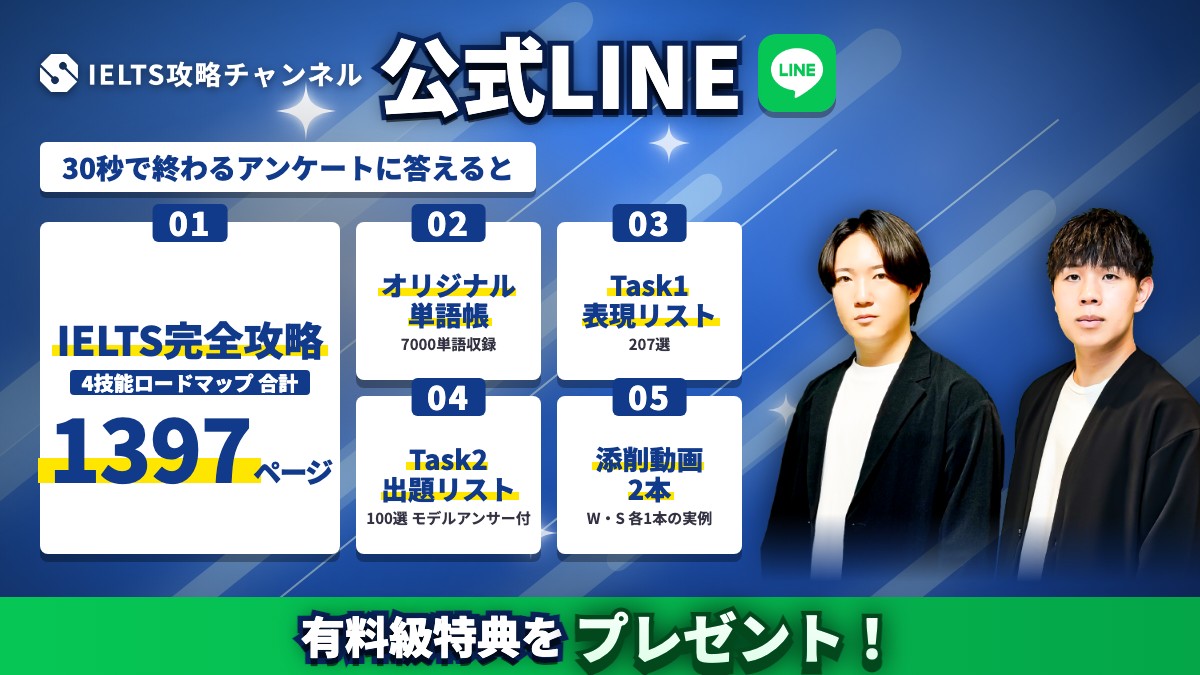
完全攻略ロードマップ(合計1397ページ)を無料配布中
リスニング・リーディング・ライティング・スピーキングの4技能それぞれを1冊ずつにまとめた完全攻略シリーズです。例題付き解説で、初心者から上級者まで対応しています。

スクール生の「生の声」をYouTubeで公開中
高校生・主婦・40代の方まで、実際にスコアを伸ばしたスクール生のインタビューを公開しています。どう勉強してスコアが伸びたのか、生の声で確認できます。

スクール生の実績まとめはnoteで公開中
OA7.0・OA8.0の達成者多数。スクール生がどれくらいの期間でどこまでスコアを伸ばしたのか、実績の詳細をnoteにまとめています。










 公式LINE登録で無料プレゼント!