
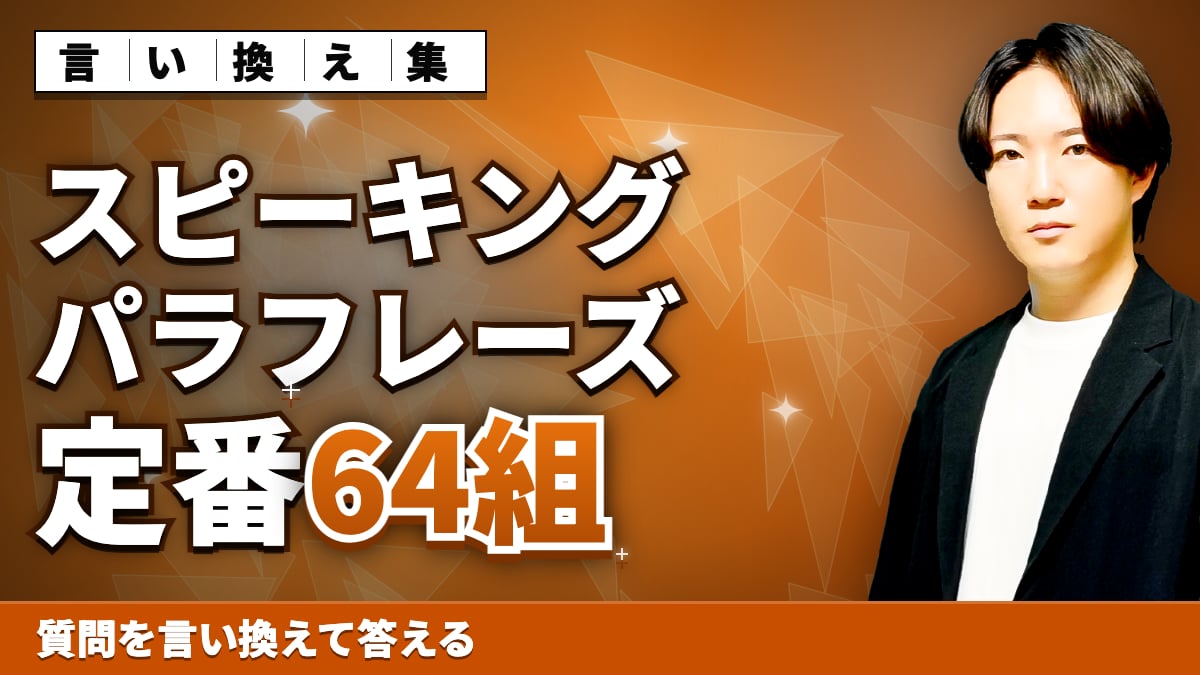
IELTSスピーキングのパラフレーズとは、質問の意味を保ったまま別の形で答えることで、難しい単語に置き換えることではありません。迷ったときは、質問の単語をそのまま使っても問題ありません。
この記事では、Part1とPart3で使える定番の言い換え64組と、should → mustのように機械的に置き換えると意味が変わる組み合わせを、質問の表現・回答で使える形・完成例の表で解説します。
単語だけを入れ替えて文法が崩れてしまう方や、質問の言い方に引きずられて同じ表現ばかり使ってしまう方に向けた記事です。質問のタイプ別に表を分けているので、気になる質問から読めます。64組をまとめて見たい方は、全パターン一覧へ移動できます。
 Riku / Kohei
RikuとKohei(IELTS講師・二人ともIELTS Overall 8.0)。2009年にカナダ初の日本人講師陣によるIELTS専門校として創設されたスクールを運営し、12年間で1,500人以上の日本人を指導してきました。その経験と公式情報の裏取りをもとに、このブログを執筆しています。
( note:【IELTS攻略チャンネル】スクール生の実績 )
言い換えのあとに文をつなぐ表現まで揃えたい方に、スピーキングリンキングフレーズ集を公式LINEで配っています。
パラフレーズは「ただの言い換え」ではない
パラフレーズとは、質問の意味を保ちながら、別の言い方で答えることです。質問に含まれる単語を、難しい単語へ置き換えることではありません。
似た意味の単語でも、いつでも置き換えられるとは限りません。単語だけを置き換えると、意味や文法が変わってしまうことがあります。そのため、この記事では言い換えを次の2種類に分けて紹介します。
- そのまま覚えやすい言い換え:示された文型の中で置き換えやすい表現
- 文の形ごと変える言い換え:品詞や語順も含め、完成形で覚える表現
扱うのは、元の内容を保ったまま、語彙の選び方や文の構造を実質的に変えられる表現だけです。地域による言い方の違い(transport / transportationなど)や、単語の短縮形(photo / photographなど)は含めません。Part1の27組とPart3の37組、合わせて64組を、質問の表現・回答で使える形・完成例の順に表にしています。
質問を聞いたときに、迷わず言える表現だけを使いましょう。言い換えが思いつかないときは、質問の単語をそのまま使っても問題ありません。質問そのものが聞き取れなかったときは、言い換えを考える前に試験官へ聞き返すときの英語フレーズで確認できます。
各表現は、表に示した意味と文型で使ってください。
Part1でそのまま使える言い換え
Part1には、質問の単語を右の列の表現へ入れ替えるだけで、完成例のように答えられる言い換えが14組あります。質問ごとの答えの順番は、Part1の質問別の答え方にまとめています。
好き・嫌いを聞かれたときの言い換え
質問のlikeはenjoyで受け直せるので、同じ意味のまま別の単語で答えられます。
| 質問の表現 | 回答で使える形 | 完成例 |
| Do you like reading? | I enjoy reading. | Yes. I enjoy reading before bed. |
| Do you like your job? | I enjoy my job. | Yes. I enjoy my job because I can help people. |
| What housework do you dislike? | I don’t like … | I don’t like cleaning the bathroom. |
likeが「〜を楽しむ」という意味で使われている場合は、enjoyで受け直せます。
- like + -ing → enjoy + -ing
- I like reading. → I enjoy reading.
- I like listening to music. → I enjoy listening to music.
enjoyの後ろに動詞を置く場合は、-ing形を使います。
| 英文 | |
| 正 | I enjoy reading. |
| 誤 | I enjoy to read. |
ただし、likeを毎回enjoyに変えられるわけではありません。次の3つは、enjoyに変えません。
| enjoyに変えない例 | 理由 |
| I like my teacher. | 人への好意を表している |
| I’d like to visit Canada. | would like toは希望を表している |
| I like to check my email in the morning. | like toが習慣や選択を表すことがある |
まずは、活動について話すlike + -ing → enjoy + -ingを覚えましょう。my jobやthe classのように、楽しめる活動・経験を表す名詞が後ろに来る場合にも使えます。
日常でよく出る表現の言い換え
日常の質問によく出る単語や句は、右の列の表現へそのまま置き換えられます。
| 質問の表現 | 回答で使える表現 | 完成例 |
| spare time | free time | In my free time, I usually read novels. |
| alone | by myself | I prefer working by myself. |
| difficult | hard | It is hard to learn to ride a bicycle at first. |
| receive a message | get a message | I usually reply as soon as I get a message. |
| receive a gift | get a gift | I recently got a useful gift from a friend. |
| type(s) of … | kind(s) of … | I like this kind of music because it helps me relax. |
| many + 複数名詞 | a lot of + 複数名詞 | A lot of people grow vegetables in my city. |
| near + 場所 | close to + 場所 | I live close to a large park. |
| child / children | kid / kids | When I was a kid, I often played outside. |
by myselfの部分は、主語に合わせて変えます。
- I → by myself
- he → by himself
- she → by herself
- they → by themselves
a lot ofは、a lot of peopleのようにofまで含めて使います。また、kidはchildのくだけた言い方で、会話でよく使われます。IELTS Speakingでは使えますが、法律や制度について述べる硬い文脈では、childやchildrenを使うほうが適切な場合があります。
そのほかの身近な表現
giftとopportunityを含む質問は、次の表現で受け直せます。
| 質問の表現 | 回答で使える表現 | 完成例 |
| receive / give a gift | receive / give a present | I received a useful present from my friend. |
| an opportunity to … | a chance to … | If I had the chance to travel abroad, I would visit Canada. |
Part1で文の形ごと変える言い換え
Part1には、単語を入れ替えるだけでは足りず、文の形ごと変えて覚える言い換えが13組あります。
好みを比べる質問
AとBのどちらが好きか、一番好きなものは何かを聞かれたら、likeを使った文で答えられます。
| 質問の表現 | 覚える回答の形 | 完成例 |
| Which do you prefer, A or B? | I like A better than B. | I like reading on paper better than reading on a screen. |
| What is your favourite …? | I like … best. | Of all animals, I like dogs best. |
得意・許可・人気・重要性・移動手段の質問
得意・許可・人気・重要性・移動手段を聞かれたときは、主語や動詞を替えた完成形で答えます。
| 質問の表現 | 覚える回答の形 | 完成例 |
| Are you good at memorising things? | I can memorise things well. | Yes. I can memorise names and numbers quite well. |
| Do your parents allow you to eat snacks? | My parents let me eat snacks. | Yes. My parents let me eat snacks after dinner. |
| Is fishing popular in your country? | A lot of people enjoy fishing. | Yes. A lot of people enjoy fishing at weekends. |
| Are friends important to you? | My friends matter to me. | Yes. My friends matter to me because they always support me. |
| What’s the most popular means of transportation in your hometown? | Most people get around by … | Most people in my hometown get around by car. |
文型の変化に注意しましょう。
- be good at memorising … → can memorise … well
- allow + 人 + to do → let + 人 + do
letの後ろではtoを使いません。
popularは「多くの人に好まれている」という文脈なら、a lot of people like/enjoy …と、人を主語にして表せます。単にpopularとenjoyを置き換えるわけではありません。
importantも同じで、importantだけを置き換えず、X is important to me → X matters to meと文全体を変えます。
means of transportationを使った質問では、人を主語にしてMost people get around by …と答えられます。get aroundは「いろいろな場所へ移動する」という会話表現です。
関心と頻度の質問
関心と普段していることを聞かれたときは、次の形で答えられます。
| 質問の表現 | 覚える回答の形 | 完成例 |
| Are you interested in …? | I find … interesting. | Yes. I find films about space interesting. |
| What do you usually do …? | Most of the time, I … | Most of the time, I read or watch videos in the evening. |
I am interested in …をI find … interestingへ変える形は、話題や活動への関心を表す場合に使えます。参加する意思を尋ねるWould you be interested in …?には当てはめません。
most of the timeは、習慣として行うことを答える場合に使えます。usuallyと一語ずつ入れ替えるのではなく、Most of the time, I …の形で覚えましょう。
希望を尋ねる質問
希望を聞かれたときは、would like toを使って答えます。
| 質問の表現 | 覚える回答の形 | 完成例 |
| Do you want to learn how to cook well? | I’d like to learn … | Yes. I’d like to learn how to cook well. |
want to → would like toは、自分の希望を少し丁寧に述べる場合に使えます。would like toの後ろは動詞の原形です。一般的な好みを尋ねるDo you like …?への答えとは区別しましょう。
子どもの頃・過去と現在の質問
子どもの頃について聞かれたときは、質問の言い方に合わせて3つの形を使い分けます。
| 質問の表現 | 覚える回答の形 | 完成例 |
| when you were a child | As a child, I … | As a child, I often played outside. |
| in your childhood | When I was a child, I … | When I was a child, I spent a lot of time with my cousins. |
| since childhood | I’ve … since I was a child. | I’ve enjoyed drawing since I was a child. |
as a childは句、when I was a childは主語と動詞を含む節です。どちらも回答の冒頭で使えます。
since I was a childで、過去から現在まで続いていることを述べる場合は、通常、現在完了を使います。
Part3でそのまま使える言い換え
Part3には、右の列の表現へ入れ替えるだけで使える言い換えが13組あります。
メリット・デメリットを聞かれたときの言い換え
advantagesやdisadvantagesを含む質問は、benefitsやdrawbacksで受け直せます。
| 質問の表現 | 回答で使える形 | 完成例 |
| advantages | benefits | One benefit of online shopping is that it saves time. |
| disadvantages | drawbacks | One drawback of online shopping is that people cannot check products in person. |
| advantages and disadvantages | pros and cons | Working from home has both pros and cons. |
| beneficial for / to … | good for … | Reading is good for children because it develops their imagination. |
disadvantageが物・案・状況の「悪い点」という意味なら、drawbackで自然に言い換えられます。
- One disadvantage of working from home is …
- One drawback of working from home is …
ただし、次のdisadvantageはdrawbackに置き換えられません。
- People without internet access are at a disadvantage.
- The new rule may disadvantage small businesses.
まずは、One drawback of X is that …を完成形で覚えましょう。
そのほかの使いやすい表現
Part3でも、頻度や時代を表す語を中心に、そのまま入れ替えられる表現があります。
| 質問の表現 | 回答で使える表現 | 完成例 |
| like + -ing | enjoy + -ing | Many children enjoy listening to stories. |
| difficult | hard | It is hard for some people to maintain friendships. |
| begin to … | start to … | Children start to have their own ideas as they grow older. |
| receive gifts | get gifts | Young people often like to get useful gifts as rewards. |
| nowadays | these days | These days, many people shop online. |
| frequently | often | People often check reviews before buying a product. |
| the majority of people | most people | Most people use their phones every day. |
| many + 複数名詞 | a lot of + 複数名詞 | A lot of people shop online these days. |
| an opportunity to … | a chance to … | Online courses give people a chance to learn at home. |
Part3でも、likeが活動を「楽しむ」という意味で使われている場合は、like + -ing → enjoy + -ingが使えます。人への好意を表すlike、希望を表すwould like to、習慣や選択を表すことがあるlike toには、機械的に当てはめません。
nowadaysとthese daysは、過去と対比して「今では」と、現在の一般的な状況や傾向を述べる場合に使います。these daysのほうがやや会話的です。発話している瞬間を表すnowの代わりには使いません。
latelyとrecentlyも日本語では「最近」と訳せますが、nowadays / these daysの単純な言い換えではありません。
| 言いたい内容 | 例文 |
| 現在の一般的な傾向 | These days, many people shop online. |
| 最近続いている状態や繰り返している行動 | I’ve been shopping online more often lately. |
| 少し前に起きた一回の出来事 | I recently bought a jacket online. |
latelyは、最近続いている状態や繰り返していることについて、現在完了と一緒に使うことが多い表現です。一回の出来事には、通常recentlyを使います。
most + 名詞は、一般的な集団の大部分を表します。特定の集団を指すときは、most of the + 名詞の形が必要になることがあります。a lot ofは、Part1と同じく、a lot of peopleのようにofまで含めて使います。
Part3で文の形ごと変える言い換え
Part3には、単語を入れ替えるだけでは意味や文法が崩れるため、文の形ごと変えて覚える言い換えが24組あります。
重要性・必要性を聞かれたときの言い換え
importantを含む質問と、必要性を尋ねる質問は、matterやneedを使って受け直します。
| 質問の表現 | 覚える回答の形 | 完成例 |
| Why is X important? | X matters because … | Exercise matters because it helps people stay healthy. |
| Which is more important, A or B? | A matters more because … | Safety matters more because it affects everyone. |
| the most important thing at work | what matters most at work | What matters most at work is having supportive colleagues. |
| Is it necessary to learn first aid skills? | We need to learn first aid skills. | We need to learn first aid skills because they can save lives. |
importantとsignificantは意味が重なる場合もありますが、いつでも置き換えられるわけではありません。重要性について答えるときは、matterを使って文の形ごと変えると、意味を保ちやすくなります。
判断・比較・人間関係の言い換え
判断・違い・人間関係を聞かれたときの言い換えは、次の3つです。
| 質問の表現 | 覚える回答の形 | 完成例 |
| make a decision | decide what to do | People should decide what to do about the problem after considering the options. |
| What is the difference between A and B? | A and B are different because … | City life and country life are different because cities offer more job opportunities. |
| get along with … | have a good relationship with … | Bosses can have a good relationship with their employees by listening to them. |
make a decisionをdecideで受け直すときは、後ろの形も文に合わせて変えます。decide what to doのように使い、decide a decisionとは言いません。
A and B are differentと述べた後は、becauseやwhileなどを使って、何が違うのかを具体的に続けましょう。
get along withが「人と良い関係にある」という意味なら、have a good relationship withで受け直せます。
影響・改善・保護の言い換え
影響を聞く質問はaffectで、改善・保護・防止・削減の方法を聞く質問はby …を続ける形で答えられます。
| 質問の表現 | 覚える回答の形 | 完成例 |
| What effect does X have on Y? | X affects Y … | Heavy traffic affects air quality. |
| How does X influence Y? | X affects Y … | Social media affects the way young people communicate. |
| What positive and negative effects do mobile phones have on friendship? | They affect friendships both positively and negatively. | Mobile phones affect friendships both positively and negatively. |
| How can we improve X? | We can make X better by … | People can make their memory better by getting enough sleep. |
| How can we protect X? | We can keep X safe by … | We can keep wild animals safe by giving them enough space to live. |
| How can we prevent X from -ing? | We can stop X from -ing by … | We can stop modern libraries from closing by giving them new roles. |
| How can we reduce our use of X? | We can use less X by … | We can use less plastic by carrying reusable bags. |
effectは名詞、affectは動詞です。単語だけを置き換えず、X has an effect on Y → X affects Yと文全体を変えます。完成例の主語Mobile phonesは複数形なので、動詞はaffectです。単数の主語なら、Social media affects …のようにaffectsを使います。
influenceとaffectは意味が重なる場合がありますが、いつでも交換できるわけではありません。この表では、「XがYに影響を与える」という質問を、X affects Y …という回答の形で受け直しています。
prevent X from -ing → stop X from -ingでは、fromの後ろを-ing形にします。
use less + 不可算名詞の形を使います。数えられる複数名詞にはfewerを使います。
| 使う語 | 例 |
| less + 不可算名詞 | less plastic、less water、less time |
| fewer + 数えられる複数名詞 | fewer plastic bags、fewer cars |
与える・能力・値段・人気の言い換え
提供・能力・値段・人気を表す質問は、次の形で受け直せます。
| 質問の表現 | 覚える回答の形 | 完成例 |
| provide training for employees | give employees training | Companies should give their employees regular training. |
| being able to swim | knowing how to swim | Knowing how to swim is important because it can save lives. |
| It is expensive to … | It costs a lot to … | It costs a lot to watch some live performances. |
| X is popular with young people. | Many young people like/enjoy X. | Many young people enjoy shopping online. |
文型の違いに注意しましょう。
- provide + 物 + for + 人 → give + 人 + 物
- being able to swim → knowing how to swimは、水泳の技能を身につけているという意味で使います。すべてのbe able to doをknow how to doに置き換えられるわけではありません。
- cost a lotは、物や行動にかかる費用が高いという意味のexpensiveに使います。
- popular → many people like/enjoy …は、「多くの人に好まれている」という意味の場合に限ります。popular beliefのように「広く一般に受け入れられている」という意味には使いません。
海外を表す言い換え
abroadを含む表現は、another countryを使って受け直せます。
| 質問の表現 | 覚える回答の形 | 完成例 |
| live / work abroad | live / work in another country | Some people want to work in another country for a short time. |
| travel abroad | travel to another country | Travelling to another country can help young people become more independent. |
abroadは副詞なので、live / work abroadやtravel abroadのように前置詞を付けません。another countryを使う場合は、動詞に合わせてlive / work in another country、travel to another countryとします。
可能性・禁止・やり方の言い換え
可能性・禁止・自信の欠如・やり方を表す表現は、次の形で受け直せます。
| 質問の表現 | 覚える回答の形 | 完成例 |
| Is it possible for X to do …? | I think X can do … | I think managers can be friends with their employees. |
| Should X be banned? | X should not be allowed. | I think advertising aimed at young children should not be allowed. |
| lack confidence | not have enough confidence | Some people don’t have enough confidence to speak in public. |
| the way people + 動詞 | how people + 動詞 | Technology has changed how people watch television. |
Is it possible for X to do …?には、可能だと考える場合、I think X can do …の形で答えられます。possibleが「起こり得る」を表す文など、すべてのpossibleをcanに変えるわけではありません。
be bannedは、公的な規則や法律で禁止する意味を含みます。規則として認めるべきではないと述べる文脈なら、should not be allowedで受け直せます。
機械的に置き換えない組み合わせ
次の8組は、意味の強さ、頻度、可能性、自然な組み合わせ方などが変わることがあるので、一組の同義語として機械的に置き換えないようにしましょう。
| 避けたい置き換え | 変わってしまうもの |
| important → significant | 文脈によって意味の範囲や使い方が異なる |
| should → must | 義務の強さ |
| often → usually | 頻度 |
| like → love | 好きの強さ |
| dislike → hate | 嫌いの強さ |
| may → will | 可能性と断定 |
| necessary → important | 必要性と重要性 |
| well-known → famous | 後ろに続く名詞によって、自然に置き換えられるかが変わる |
Riku / Koheia well-known actor → a famous actorのように、人物などについては自然に言い換えられることがあります。一方、a well-known fact → a famous factは安全な言い換えではありません。well-known = famousと一組で丸暗記せず、両方が自然に使える対象に限って使いましょう。
全パターン一覧|言い換えをまとめて確認する
本文で紹介した64組を、Part1(27組)とPart3(37組)の2つの表にまとめました。まずは、質問の表現を見て、回答の形を口に出せるか確認してみましょう。※の付いた表現は使える場面が限られます。※を押すと、表の下にあるその表現の条件へ移動します。
全パターンの一覧表
| Part1(27組) | |
| 質問の表現 | 回答で使える形 |
| Do you like reading? | I enjoy reading.※ |
| Do you like your job? | I enjoy my job.※ |
| What housework do you dislike? | I don’t like … |
| spare time | free time |
| alone | by myself |
| difficult | hard |
| receive a message | get a message※ |
| receive a gift | get a gift※ |
| type(s) of … | kind(s) of … |
| many + 複数名詞 | a lot of + 複数名詞 |
| near + 場所 | close to + 場所 |
| child / children | kid / kids※ |
| receive / give a gift | receive / give a present |
| an opportunity to … | a chance to … |
| Which do you prefer, A or B? | I like A better than B. |
| What is your favourite …? | I like … best. |
| Are you good at memorising things? | I can memorise things well. |
| allow + 人 + to do | let + 人 + do |
| Is … popular? | A lot of people like/enjoy …※ |
| X is important to me. | X matters to me. |
| the most popular means of transportation | Most people get around by … |
| Are you interested in …? | I find … interesting.※ |
| What do you usually do …? | Most of the time, I …※ |
| Do you want to …? | I’d like to …※ |
| when you were a child | As a child, I … |
| in your childhood | When I was a child, I … |
| since childhood | I’ve … since I was a child.※ |
| Part3(37組) | |
| 質問の表現 | 回答で使える形 |
| advantages | benefits |
| disadvantages | drawbacks※ |
| advantages and disadvantages | pros and cons |
| beneficial for / to … | good for … |
| like + -ing | enjoy + -ing※ |
| difficult | hard |
| begin to … | start to … |
| receive gifts | get gifts※ |
| nowadays | these days※ |
| frequently | often※ |
| the majority of people | most people※ |
| many + 複数名詞 | a lot of + 複数名詞 |
| an opportunity to … | a chance to … |
| Why is X important? | X matters because … |
| Which is more important, A or B? | A matters more because … |
| the most important thing at work | what matters most at work |
| Is it necessary to …? | We need to … |
| make a decision | decide what to do |
| What is the difference between A and B? | A and B are different because … |
| get along with … | have a good relationship with … |
| What effect does X have on Y? | X affects Y …※ |
| How does X influence Y? | X affects Y …※ |
| What positive and negative effects does X have on Y? | X affects Y both positively and negatively.※ |
| How can we improve X? | We can make X better by … |
| How can we protect X? | We can keep X safe by … |
| How can we prevent X from -ing? | We can stop X from -ing by … |
| How can we reduce our use of X? | We can use less X by … |
| provide training for employees | give employees training |
| being able to swim | knowing how to swim※ |
| It is expensive to … | It costs a lot to … |
| X is popular with young people. | Many young people like/enjoy X.※ |
| live / work abroad | live / work in another country |
| travel abroad | travel to another country |
| Is it possible for X to do …? | I think X can do …※ |
| Should X be banned? | X should not be allowed.※ |
| lack confidence | not have enough confidence |
| the way people + 動詞 | how people + 動詞 |
※のある表現を使う条件
※の付いた表現は、どこでも一語ずつ置き換えられるわけではありません。使う前に、次の表で「使えるとき」を確かめましょう。
| Part1の※ | |
| 言い換え | 使えるとき・注意 |
| like → enjoy | 活動や経験を「楽しむ」と言うときだけ。後ろに動詞を置くときは -ing 形にする |
| receive → get | 「受け取る」という意味のときだけ |
| child / children → kid / kids | 会話向けの言い方。法律や制度の話のような硬い場面では child / children のほうが合う |
| interested in → find … interesting | 話題や活動への関心を言うときだけ。参加したいかを聞く Would you be interested in …? には使わない |
| usually → most of the time | 習慣として行うことを答えるとき |
| want to → would like to | 自分の希望を少し丁寧に言うとき。好みを聞く Do you like …? の答えには使わない |
| since childhood | 子どもの頃から今まで続いていることなので、ふつうは現在完了(I’ve …)で答える |
| Is … popular? → A lot of people like/enjoy … | 質問の意味に合わせて、文全体を組み替える |
| Part3の※ | |
| 言い換え | 使えるとき・注意 |
| disadvantage → drawback | 物・案・状況の「悪い点」を言うとき。at a disadvantage や動詞の disadvantage には使わない |
| like + -ing → enjoy + -ing | 活動や経験を「楽しむ」と言うときだけ |
| receive gifts → get gifts | 「受け取る」という意味のときだけ |
| nowadays → these days | 今の一般的な状況や流れを言うとき。話している瞬間を表す now の代わりには使わない |
| frequently → often | 元の頻度を変えずに言えるときだけ |
| the majority of people → most people | 人々全体の大部分を言うとき。特定の集団には most of the + 名詞 の形が必要になることがある |
| effect / influence → affect | 「X が Y に影響を与える」と言うとき。effect は名詞、affect は動詞なので文の形も変える |
| being able to swim → knowing how to swim | 泳ぎ方を身につけているという意味のとき。ほかの be able to do には広げない |
| popular / possible / banned の質問 | 質問の意味に合わせて、文全体を組み替える |
言い換えを口に出す練習では、次の英文を考える間の沈黙をつなぎ言葉で埋めると、表の形を落ち着いて言えます。まずはPart1の表から数組を選んで、完成例を声に出してみてください。
言い換えた答えを自然につなげたい方に、文をつなぐスピーキングリンキングフレーズ集を公式LINEで配っています。
【無料】LINE限定特典セットでIELTS対策を完全マスター
公式LINEでは、4技能それぞれの対策教材や単語帳など、ブログには載せきれないIELTS対策のノウハウを配っています。友だち追加のあとに届くかんたんな質問に答えるだけで、有料級の特典をまとめて受け取れるので、ぜひ登録してみてください。
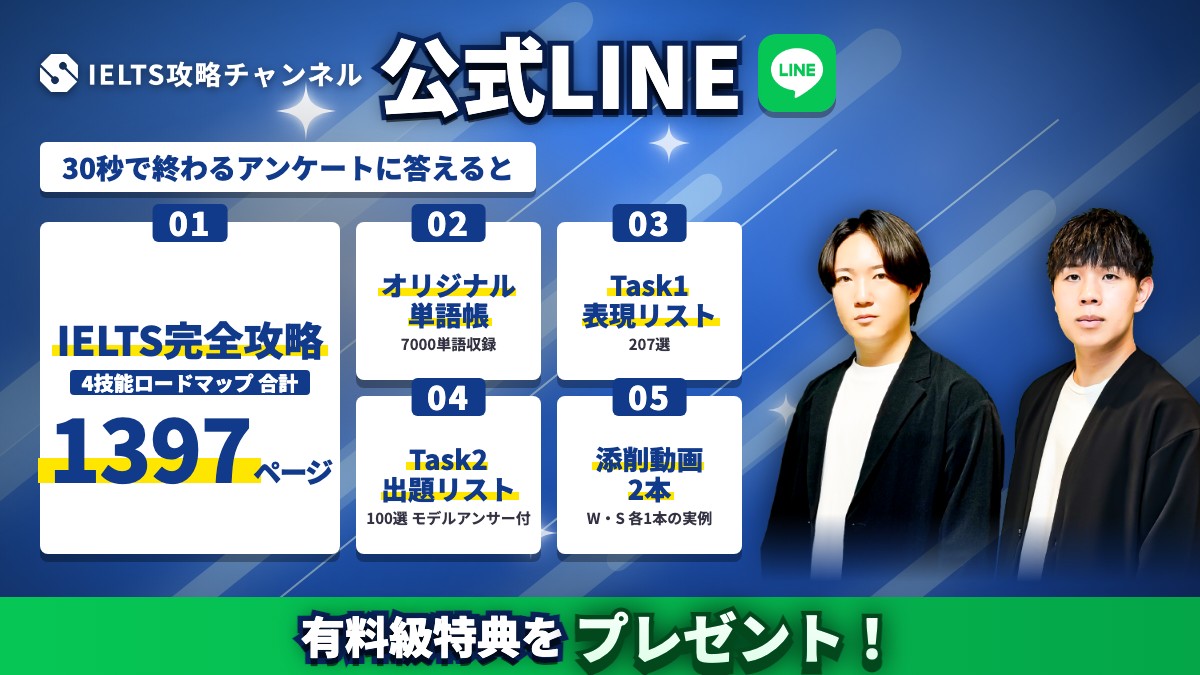
完全攻略ロードマップ(合計1397ページ)を無料配布中
リスニング・リーディング・ライティング・スピーキングの4技能それぞれを1冊ずつにまとめた完全攻略シリーズです。例題付き解説で、初心者から上級者まで対応しています。

スクール生の「生の声」をYouTubeで公開中
高校生・主婦・40代の方まで、実際にスコアを伸ばしたスクール生のインタビューを公開しています。どう勉強してスコアが伸びたのか、生の声で確認できます。

スクール生の実績まとめはnoteで公開中
OA7.0・OA8.0の達成者多数。スクール生がどれくらいの期間でどこまでスコアを伸ばしたのか、実績の詳細をnoteにまとめています。



 公式LINE登録で無料プレゼント!